



































The arts appeared on the official S.T.A.L.K.E.R. public. The bogs were the starting location in the independent supplement “Clean Sky”, released in 2008 – they were based on members of the group “Clean Sky”, who were at war with the “Renegades”. The exact release date of S.T.A.L.K.E.R. 2 not yet. The game will be a temporary Xbox console exclusive and will be available on PC and Xbox Series at launch.

Lance MacDonald, known for finding clipped content from FromSoftware games and creating mods for them, shared his information about Elden Ring during a stream on Twitch.
According to MacDonald, he followed the FromSoftware contractors and found out what one of them was doing. Judging by the content of the work of this employee, as McDonald said, Elden Ring should be in the final stages of production.
The blogger noted that he does not know whether the game will be shown at the awards ceremony of The Game Awards 2020, which will take place in December or not.
Understanding the Shift Toward Online Casino Culture
The way people choose to unwind after a long day has changed noticeably over the last decade. Instead of heading out to physical venues that require travel and planning, many now open an app or browser tab for a few rounds of entertainment from the comfort of home. This change reflects broader habits around convenience, shorter attention windows, and the desire for instant access to games without extra logistics. AmonBet fits into this movement by offering an environment where familiar titles sit alongside newer formats that appeal to different experience levels.
Players often mention that the ability to start and stop sessions quickly matters more than flashy promotions. They appreciate when rules, payout tables, and session timers are presented in plain language rather than buried in dense menus. Clear navigation helps both newcomers and returning users locate their preferred games without unnecessary clicks. When information is easy to find, the overall experience feels less stressful and more like a genuine leisure choice rather than a complicated process.
Another factor driving interest is the rise of livestream casino content. Viewers watch real dealers handle cards or spin wheels while interacting through chat features. This hybrid format combines the social element of traditional venues with the privacy of remote play. AmonBet incorporates some of these live options alongside classic slots and table games, giving users a chance to observe before deciding whether to participate themselves.
Popular Gambling Games and How They Compare
Slots remain the most widely played category because they require minimal prior knowledge and deliver results within seconds. Modern titles include multiple reel configurations, bonus rounds, and themed animations that keep visual interest high during longer sessions. Players appreciate when volatility levels and return-to-player percentages appear directly on the game screen rather than hidden behind separate information pages. AmonBet presents these details in a straightforward layout that avoids overwhelming new users with too many pop-up windows at once.
Table games such as blackjack and roulette attract a different segment of the audience. These options reward pattern recognition and basic strategy, creating a sense of progression across multiple rounds. Many users alternate between slots and table games within the same evening, seeking variety instead of committing to one format exclusively. The platform supports this style of play by allowing quick switches between categories without forcing repeated logins or account adjustments.
- Live dealer blackjack provides real-time interaction while maintaining clear betting limits suitable for different budgets.
- Progressive jackpot slots link multiple machines, increasing potential payouts as more players contribute to the shared pool.
- Video poker combines elements of slots and strategy, offering skill-based decisions within short timeframes.
Comparing these choices side by side shows that no single game suits every preference. Some individuals prefer the solitary pace of spinning reels, while others enjoy the social cues present in live dealer rooms. AmonBet organizes its lobby to reflect this diversity, letting users filter games by theme, volatility, or provider without additional software downloads.
Player Safety Measures and Practical Account Tools
Responsible play features have become standard expectations rather than optional extras. Deposit limits, time reminders, and session history summaries help individuals stay aware of their activity without needing external tracking tools. When these functions are placed prominently in account menus, users are more likely to review them regularly instead of ignoring settings buried several layers deep. AmonBet includes these options in an accessible format that does not require advanced technical knowledge to activate or modify.
Security considerations also extend to payment processing. Clear descriptions of transaction times, supported methods, and verification steps reduce uncertainty during deposits and withdrawals. Players report greater confidence when they can see expected processing windows before initiating a transfer rather than discovering delays only after the fact. The platform maintains separate sections for payment history and pending requests, making it easier to follow each step of the process.
Another practical detail involves customer support channels. Live chat, email tickets, and FAQ sections each serve different urgency levels. When support representatives respond with specific references to account activity instead of generic replies, users feel their concerns are actually being addressed. AmonBet routes common questions through an organized help center while reserving live agents for time-sensitive matters such as transaction issues or game interruptions.
User Experience Design and Navigation Details
Interface layout influences how long someone stays engaged and whether they return. Menus that remain consistent across desktop and mobile versions prevent confusion when users switch devices mid-session. Large, clearly labeled buttons for game categories, account settings, and help resources reduce accidental clicks that send players to unintended pages. AmonBet uses a clean color scheme and predictable placement that follows common web conventions rather than introducing unusual gestures or hidden panels.
Search functionality often determines whether a player can quickly locate a specific title among hundreds of available options. Filters for provider, volatility, and jackpot size allow refinement without scrolling through every entry. When search results load within a second or two, the experience feels responsive rather than sluggish. The platform also displays recent games and favorites in a dedicated area, saving time for those who revisit the same selections regularly.
Loading times for individual games affect overall satisfaction more than promotional banners. A title that opens almost immediately after selection encourages exploration of new releases, while slow performance leads users to stick with familiar choices. AmonBet places game previews and technical requirements near each thumbnail, helping players understand what to expect before committing to a full launch.
Modern Leisure Habits and Balanced Decision Making
Many people now treat online entertainment as one option among several rather than the sole evening activity. They might combine thirty minutes of game play with reading, streaming, or messaging friends. This blended approach requires platforms to support short sessions without pressuring extended play. AmonBet accommodates this pattern through optional session timers and clear exit buttons that do not trigger additional confirmation screens unnecessarily.
Understanding personal limits remains central to maintaining a positive relationship with any leisure activity. Budget tracking tools and voluntary cool-down periods provide practical ways to pause without permanent account changes. Users who review their activity summaries regularly tend to adjust spending more consciously than those who rely solely on memory. The platform presents these summaries in plain tables that list dates, amounts, and game types rather than converting everything into complex charts that require interpretation.
Comparing different platforms reveals that convenience features matter more to long-term satisfaction than initial welcome offers. Transparent rules around verification, payout schedules, and game fairness create trust that survives beyond the first few sessions. AmonBet maintains steady documentation that updates when policies change, allowing players to stay informed without needing to contact support for routine clarifications. This approach supports both casual visitors and those who develop regular playing patterns over months or years. The availability of Amon Bet resources further assists individuals who prefer to review details independently before making decisions.

The Visual Comfort That Defines Modern Online Casino Spaces
GoldenBet has quietly become a reference point for players who care about how an online casino feels the moment they open the lobby. Instead of relying on loud animations and cluttered banners, the interface uses a muted color palette that keeps the eyes comfortable during long sessions. Navigation is arranged so that the live casino area sits directly beside the slots section, eliminating the need to hunt across multiple tabs. This small but deliberate layout choice creates a sense of calm rather than urgency, something many frequent visitors notice after trying several competing platforms. The loading times remain consistent even when hundreds of thumbnails populate the screen, which helps maintain immersion without constant buffering interruptions.
When comparing the atmosphere here to older casino sites, the difference shows up in details like the way game previews load in soft hover states rather than abrupt pop-ups. Players who switch between desktop and mobile notice that the same visual hierarchy stays intact, so they never have to relearn where key controls sit. Subtle background gradients replace the flashing borders common on other dashboards, and font sizes adjust automatically according to screen width. These adjustments may seem minor at first glance, but they accumulate into a more sustainable browsing rhythm that supports longer, relaxed visits.
How Slots Are Presented Without Overwhelming Choice
Slot games inside GoldenBet are grouped by mechanic instead of pure theme, which changes how players browse. Instead of scrolling through endless rows labeled “Egypt” or “Fruit,” the categories focus on payline structures, bonus round types, and volatility levels. This approach helps users who already know whether they prefer frequent small wins or rarer larger payouts. The filtering menu includes sliders for minimum and maximum bet amounts, letting someone adjust stakes before even clicking into a game preview.
Thumbnail artwork receives equal attention to the actual reels. Each preview carries a small badge indicating the game’s RTP range, so players do not need to open the information panel just to gauge expected return. Animations on the thumbnails stay restrained, playing only when hovered, which prevents the lobby from feeling like a wall of motion. Players who enjoy progressive jackpots can toggle a separate view that displays only those titles, keeping the main feed uncluttered for everyone else. The overall effect is that selection becomes a deliberate process rather than an overwhelming scroll.
Livestream Casino Content and the Role of Atmosphere
Live dealer tables on GoldenBet are filmed with multiple camera angles that switch automatically when the action moves from dealing to community cards or roulette spins. The lighting remains consistent across shifts, avoiding the harsh contrast that can make some streams feel clinical. Dealers maintain conversational pacing without forcing jokes, which suits viewers who keep the stream running in the background while they manage other tasks on the same device.
Chat moderation appears light yet present, allowing natural conversation while quickly removing spam. The overlay displays current bet totals and recent win notifications at the bottom of the frame without blocking the table view. Players who prefer quieter experiences can collapse the chat entirely, leaving only the dealer feed and their own betting panel. This level of customization means the same stream can serve both social viewers and those seeking focused concentration. Compared with platforms that auto-play sound effects, the option to keep audio muted by default reduces fatigue after an hour or two of watching.
- Multiple camera options for roulette and blackjack that update in real time.
- Adjustable volume and chat visibility controlled from a single menu.
- Dealer schedules listed 48 hours in advance so viewers can plan sessions.
Balancing Convenience Against Responsible Play Tools
GoldenBet integrates session timers and spending summaries directly into the account dashboard rather than hiding them behind multiple clicks. After thirty minutes of continuous play, a gentle notification appears asking whether the user wants to continue or review current activity. Deposit limits can be set on a daily, weekly, or monthly basis, and changing them requires an additional confirmation step the next day. These measures sit alongside the standard game library without interrupting the flow for players who already maintain their own boundaries.
Reality-check messages are worded plainly, stating exact minutes played and total amount wagered so far. The design avoids dramatic colors or urgent language, which keeps the tone informative rather than alarming. Some users appreciate being able to export their personal play data as a CSV file for their own records. Others use the self-exclusion options that range from twenty-four hours up to six months, with clear instructions on how to reverse the choice once time has passed. The tools coexist with the entertainment elements instead of feeling like an afterthought added only for compliance.
Compared with sites where safety settings require navigating through three separate menus, the placement here keeps everything accessible within the main profile area. This reduces friction for anyone who decides mid-session that they want to adjust limits without losing their place in a live table. The balance between convenience and boundary-setting remains visible throughout the experience.
Modern Leisure Habits and the Place of Digital Gambling
Many adults now treat short online casino visits as one of several leisure options available on the same evening. GoldenBet fits into these mixed routines because the platform loads quickly enough to be opened during a commute or between household tasks. The ability to switch from slots to a live blackjack table in under ten seconds supports fragmented attention spans without requiring a full commitment of time. Users frequently mention keeping one tab open while they answer messages or watch a show in another window.
Community features remain optional rather than central, allowing players who prefer solitary play to stay focused on individual games. At the same time, the live chat in streamed tables provides a low-pressure way to connect if desired. The site does not push social features as a requirement for enjoyment, which matches current habits where people move fluidly between connected and disconnected states throughout the day. Golden Bet Betting appears in user discussions mainly because its layout accommodates both quick dips and deeper evening sessions without forcing either mode.
Device compatibility continues to influence how people schedule their leisure. When a platform maintains the same visual language across phone, tablet, and laptop, players report feeling more confident jumping between contexts. GoldenBet’s responsive design preserves button placement and color coding regardless of screen size, reducing the cognitive load of adapting to new layouts each time someone changes devices. This consistency supports the trend of leisure happening in short, opportunistic windows rather than long dedicated blocks of time.
Payment methods also reflect broader changes in digital habits. The presence of instant wallet options alongside traditional card processing caters to users who prefer smaller, frequent top-ups instead of larger scheduled deposits. Transaction histories display in a single scrollable list with filters for game type and time period. This level of visibility helps players track spending in alignment with their personal budgets without needing external spreadsheets. Over longer periods, these small conveniences accumulate into a noticeably smoother relationship with digital entertainment.
How Mobile Devices Have Changed How People Enjoy Casino Games
Modern players often begin their sessions on a phone while waiting for coffee or riding public transport. The shift from desktop to mobile has not only increased accessibility but also changed the way games are designed and played. Interfaces have become simpler, with larger buttons and clearer menus, allowing users to focus on the action without extra steps. Many developers now test every update on multiple screen sizes to ensure stability across different handsets. This focus on mobile-first experiences means that loading times matter more than ever, and players notice when a game responds instantly versus when it lags behind their touches.
Another practical change involves orientation. Most players switch between portrait and landscape depending on the game type and personal preference. Portrait mode works well for quick spins on small screens because it leaves room for notifications and progress indicators, yet landscape often provides wider views of reels or table layouts. Fast loading and smooth animations help maintain engagement even when a connection slows down slightly. In practice, users compare experiences across different platforms, and those that fail to feel natural on a phone tend to lose regular visitors quickly.
Developers also adjust sound settings for mobile environments where users wear headphones or keep volume low in shared spaces. This attention to detail adds comfort during longer sessions. The result is a culture where leisure choices fit around daily routines rather than requiring dedicated time at a computer desk.
What Sets Livestream Casino Content Apart in Today’s Market
Live dealer streams offer players a chance to watch real-time decisions made by hosts while interacting through simple chat functions. Unlike pre-recorded videos, these broadcasts create a shared moment where participants can see the outcome of each round as it happens. Many viewers appreciate the human element, such as a dealer explaining rules casually or greeting repeat watchers by name during busy periods. The format works especially well on phones because the video window can sit beside other app features without blocking everything else.
Compared with earlier online tables that relied only on random number generators, livestream options add transparency that some players find reassuring. They can observe the physical shuffle or wheel spin directly, which mirrors the atmosphere of a physical venue more closely. Still, the experience remains entirely digital, allowing access from locations where travel to a land-based site would be impractical.
The technical side includes stable camera angles and quick transitions between games. Stream quality often determines whether someone stays for multiple rounds or switches to another broadcast. When the feed remains crisp on mobile data, viewers tend to return during scheduled times, forming lightweight communities around particular hosts or game types.
Understanding Popular Games and Slot Features on Mobile Screens
Slots continue to dominate playtime because they require minimal setup and deliver results within seconds. Modern titles use themed reels, bonus rounds, and progressive elements that activate after certain combinations appear. On smaller screens, icons resize automatically to remain recognizable while keeping text readable. Players notice when controls sit within easy thumb reach instead of requiring precise taps near the edge of the display.
Table games like roulette or blackjack translate differently to mobile. Virtual versions often include quick-bet buttons and simplified rule explanations that open in overlays rather than separate windows. Touch-friendly interfaces reduce errors during fast rounds, especially when players adjust bets frequently. Comparisons between older apps and current releases show clearer graphics and reduced battery drain, which matters during extended sessions away from a charger.
- Simple swipe gestures replace multiple clicks for placing bets or spinning reels.
- Auto-play options allow short breaks without losing current game progress on the device.
- Daily login rewards appear as small icons that encourage brief visits rather than long commitments.
These adjustments reflect broader leisure habits where entertainment competes with messaging apps, social feeds, and short video platforms for attention throughout the day. Games that respect limited time windows tend to perform better among users who value flexibility.
Player Safety Measures and Responsible Use in Digital Environments
Safety features now form part of the basic setup on most platforms, rather than optional extras. Tools such as deposit limits, session reminders, and quick self-exclusion options appear within account settings that users can adjust without contacting support. On mobile apps, these controls sit in menus that open with one or two taps, keeping them accessible even during active play. Regular updates often include clearer explanations of how each measure works, reducing confusion for new participants.
Data protection also involves visible indicators like secure connection symbols and straightforward privacy summaries. Players compare these elements across different services and tend to favor platforms that display certification badges from recognized testing agencies. When issues arise, responsive support through in-app chat helps resolve questions quickly without forcing users to leave the mobile environment. Concrete examples include instant confirmation messages after changing limits and weekly summaries showing activity patterns that encourage self-review.
These practical steps support a balanced approach where entertainment fits within personal boundaries. They address common concerns about time and money management without disrupting the flow of gameplay itself.
Comparing Modern Leisure Habits With Earlier Casino Experiences
Older casino visits often required travel, specific clothing, and dedicated evening hours. In contrast, current mobile sessions can last ten minutes during lunch or stretch longer on weekends depending on individual schedules. The difference affects both choice of games and social dynamics. Many users now combine short play periods with other activities such as listening to music or checking messages, creating a mixed-use pattern of attention rather than focused immersion.
Payment methods have also evolved. Digital wallets and instant transfers replace the need to carry cash or visit physical counters. On phones, transaction history remains visible in the same app, helping users track spending alongside wins or losses. This integration supports informed decisions without additional research or external tools.
This evolution in habits shows how convenience shapes preference. Where earlier generations might plan casino nights in advance, contemporary users expect immediate access and the ability to pause at any moment. The result is a more fragmented yet widely adopted form of digital entertainment that fits around existing routines. Chicken Road Fortune Casino illustrates these changes with its mobile layout and range of quick-access games suited to brief or extended visits depending on personal preference.

Why many users choose Clubhouse for evening sessions rather than traditional casino apps
People often pick Clubhouse because the interface avoids the flashing banners and constant pop-ups that can make other platforms feel frantic. Instead of rushing through menus, users find a clear layout that supports longer, more deliberate play periods. The design shows attention to spacing, readable fonts, and understated color choices that reduce eye strain during extended visits. Practically, this means a player can open the site after dinner, decide on a few games, and stay comfortable without visual overload. Compared with mobile-first casino apps that push quick deposits every few minutes, Clubhouse keeps navigation predictable and steady so attention stays on the games themselves rather than on promotional interruptions.
Another factor is the way Clubhouse handles session length. Many platforms encourage short, repeated log-ins with rewards that reset frequently, but here the emphasis leans toward sustained use without timers nagging the user. Players report that they can pause, check messages, or step away without feeling they are losing progress or missing limited offers. The experience becomes closer to opening a familiar lounge than to entering a crowded arcade. That slower pace appeals to adults who treat the activity as one part of a balanced evening rather than the main event.
How slots continue to dominate player time and what that reveals about modern habits
Slots remain the most-used category across many digital platforms because they combine quick rules with high visual variety. Within Clubhouse the selection includes classic three-reel titles alongside video slots that carry layered bonus rounds. The difference for the user often lies in how clearly each game explains its mechanics before the reels start. Clear pay tables, readable symbols, and predictable sound cues help reduce frustration during the first few spins. Players who enjoy longer sessions find that some titles allow manual adjustment of speed and sound so the experience can be tuned to personal preference rather than left at default settings.
Modern leisure patterns show that many adults prefer games that fit between other activities. A slot session can begin during a commute home, continue while dinner simmers, and pause again without losing the thread. Clubhouse mirrors this by keeping menus accessible on both larger screens and tablets, so transitions between devices stay smooth. The format suits users who do not want to commit an entire evening to a single table game that requires constant decision making. Instead, they rotate between slots and short breaks, maintaining control over how much time and attention each game receives.
When comparing slot libraries, users notice that Clubhouse updates its catalog steadily rather than releasing dozens of new titles at once. This measured approach avoids overwhelming newcomers while still offering fresh options every few weeks. Regular players appreciate the chance to revisit familiar games that receive occasional visual refreshes without losing their core mechanics. The result is a library that feels curated instead of flooded, which reduces decision fatigue when someone logs in looking for something specific.
Live dealer streams and the balance between entertainment and clarity
Livestream casino content has grown because viewers enjoy seeing real dealers handle cards and wheels without hidden automation. In Clubhouse the camera angles stay consistent and the audio remains clear even when multiple tables operate simultaneously. Viewers can follow the flow of bets without guessing what happened off-screen. This transparency matters when a player wants to understand how a particular table manages pace and table minimums before committing funds. The streams also show the dealer interacting with the chat in a measured way that avoids performance theatrics, keeping the focus on the actual game.
One advantage these streams offer is the ability to watch before joining. A user can observe several rounds, note the speed of play, and decide if the table suits their preferred tempo. Clubhouse keeps the stream window separate from the betting interface so viewers do not feel pressure to act immediately. This separation supports a more considered approach: some people watch for twenty minutes while handling other tasks, then decide whether to participate. The option to remain an observer reduces the sense that every visit must involve active wagering.
Practical observations from regular viewers include the importance of stable connections and the benefit of adjustable volume controls. When the stream quality drops, most users prefer to exit cleanly rather than continue with interruptions. Clubhouse provides simple reconnection prompts that preserve the session state, so returning after a brief network issue does not require restarting the entire login process. Such small details matter during longer evenings when the goal is relaxed entertainment rather than intense focus.
Player safety features and how they shape daily decisions
Safety tools now form part of the expected experience rather than optional extras. Clubhouse includes deposit limits, time reminders, and straightforward self-exclusion options that users can activate without contacting support. These features sit in an account section that uses plain language instead of legal paragraphs, making it easier for someone to set boundaries during the first session. The presence of these tools does not guarantee responsible behavior, but it removes friction for players who want to monitor their own patterns.
Another practical aspect involves transaction records. Users receive clear summaries of deposits, withdrawals, and game activity without needing to request statements. This visibility helps individuals track spending over weeks rather than relying on memory. When a platform presents this information automatically, players spend less time searching through emails or support tickets. Clubhouse places the summary view on the main account screen so it becomes part of the routine rather than an afterthought.
- Deposit and loss limits adjustable from the same screen as game selection
- Session time alerts that appear without blocking the current table or slot
- History export option for personal record keeping
- Self-exclusion periods ranging from one day to several months
Comparisons with older casino sites show that many early platforms buried these controls deep in menus or required email requests. The shift toward immediate access reflects broader expectations that digital services should support user-defined limits without extra steps. Clubhouse follows this direction while still keeping the overall interface uncluttered so safety tools do not compete visually with the games themselves.
Comparing Clubhouse routines with other leisure options available today
Many adults balance several digital activities during a typical week. Some evenings involve streaming series, others feature short mobile games, and occasional sessions occur on platforms such as Clubhouse. The choice often depends on desired mental engagement level. A slot or live dealer table can provide visual stimulation and occasional decision points without the narrative commitment required by a long film. At the same time, the activity remains optional rather than scheduled, fitting around variable work hours or family responsibilities.
The pace of play on Clubhouse also differs from competitive online games that reward constant improvement and ranking. Here the emphasis stays on repetition and personal rhythm rather than outperforming others. Players who return regularly often develop preferences for certain themes or table styles based on how those choices affect their mood rather than on winning streaks. This shift from performance to comfort explains why some users describe their visits as similar to listening to a familiar playlist instead of entering a tournament bracket.
Physical comfort plays a larger role than many people acknowledge. A well-lit room, an ergonomic chair, and the ability to adjust screen brightness all contribute to longer, more pleasant sessions. Clubhouse supports these variables by remaining usable in both bright and dim environments without forcing high-contrast effects. The platform does not require full-screen mode, so users can keep other applications visible if they prefer a split attention setup during quieter moments.

Entrance and First Impressions
When the digital doors of Cocoa Casino swing open, the layout greets visitors with the quiet confidence of a well-designed lounge rather than the aggressive neon overload that marks many older platforms. Subtle gradients of warm cocoa brown and deep burgundy create an immediate sense of enclosure, while crisp white highlights keep navigation text legible even late at night. The homepage loads with a slow pan across an animated cocoa bean motif that transitions smoothly into slot reels, giving players time to absorb the atmosphere without being rushed into pressing buttons. Designers clearly studied hotel interiors where lighting is layered, ensuring every element feels intentional rather than purely promotional. First-time visitors often linger on the lobby screen longer than expected, drawn in by the balance between richness and restraint rather than flashing banners.
Sound design plays an equally important role at the entry point. Instead of looping casino floor recordings, Cocoa Casino offers a soft jazz-infused track that fades gently when a player selects a game, preserving focus once reels or tables appear. This approach mirrors how high-end bars lower background music once conversation begins, allowing the mechanical clicks of spinning symbols or the soft shuffle of virtual cards to take center stage. Even the loading animations carry weight: gentle cocoa-dust particles drift across the screen before resolving into game thumbnails, a small but memorable touch that signals attention to every micro-interaction. Players coming from louder, brighter sites often comment on how quickly they feel at home inside this calmer environment.
Visual Language and Interface Details
The visual system at Cocoa Casino relies on consistent iconography and generous spacing rather than dense grids of thumbnails. Game categories sit behind elegant pill-shaped buttons that change shade on hover, providing tactile feedback without requiring aggressive clicks. Slot previews use a 16:9 ratio with subtle parallax movement, so a quick glance reveals both artwork and volatility indicators without forcing users to open each title. Typography choices favor a slightly condensed serif for headings, lending an editorial tone reminiscent of lifestyle magazines rather than typical gambling portals. The color temperature stays warm across all devices, reducing eye strain during extended sessions that might stretch past midnight. Every interface decision prioritizes calm scanning rather than hurried decision-making.
Practical details further demonstrate the design philosophy. The search bar sits at the upper right with a magnifying glass that pulses once when results load, guiding the eye without distraction. Filter options appear as sliding tabs rather than long dropdown lists, allowing players to narrow selections by volatility, theme, or provider while keeping the visible game grid intact. Accessibility considerations include high-contrast text options and scalable font controls embedded directly in the footer, choices often overlooked in the rush to launch new features. The result is an environment that remains comfortable whether someone plays casually for twenty minutes or explores dozens of titles over several hours.
Comparisons with earlier casino designs highlight how far the industry has evolved. Older platforms frequently crammed promotional carousels above every menu, creating visual fatigue within seconds. Cocoa Casino reserves prime real estate for curated collections, such as newly released slots or staff picks, while pushing time-limited offers into a collapsible tray accessed only when relevant. This restraint keeps the focus on gameplay and atmosphere. Players moving between desktop and mobile notice how the same visual hierarchy scales without collapsing into cluttered columns, maintaining the signature cocoa palette even on smaller screens where space is limited.
Atmosphere Across Game Categories
Slots occupy the largest section of the platform, and their presentation varies deliberately to match diverse player moods. Classic three-reel games appear against darker backdrops with metallic frames, evoking vintage machines found in quiet corners of land-based venues. Video slots, by contrast, receive generous artwork space and animated backgrounds that shift color with each spin, keeping the screen lively without overwhelming the symbols themselves. Progressive jackpots sit in their own alcove, their counters displayed in large, soft-glowing numerals that update without flashing urgency. This variety ensures that someone seeking simple nostalgia and another chasing modern cinematic experiences both feel equally accommodated within the same overall aesthetic.
Table games receive equally thoughtful treatment. Blackjack and roulette tables appear as top-down illustrations with wooden textures and subtle reflections, creating the impression of sitting across from a dealer rather than merely betting on numbers. Live casino offerings shift the visual tone again, using real-time camera feeds framed by the same cocoa-and-burgundy borders rather than generic studio sets. The transition between pre-recorded demo videos and actual streamed tables happens seamlessly, with loading states that display brief host introductions before cameras activate. Such continuity prevents the jarring break in mood that often occurs when players move between game types on less cohesive platforms.
- Soft ambient lighting that adjusts automatically based on time of day
- Consistent cocoa color palette across desktop and mobile views
- Layered audio that respects both focus and relaxation
- Curated collections rather than endless promotional carousels
Livestream Experiences and Social Layers
Livestream casino content at Cocoa Casino integrates into the same design language rather than appearing as a separate portal. Hosts appear within frames that match the platform’s signature color scheme, while chat overlays stay semi-transparent so they never fully obscure the table. When a host celebrates a win or explains a rule, their video feed expands smoothly instead of cutting away from the game view. This attention to rhythm keeps viewers engaged without forcing them to toggle between windows or lose visual continuity. The social layer feels optional rather than mandatory, allowing solitary players to observe quietly while groups can interact through quick emoji reactions or brief text messages.
Technical execution matters here as much as atmosphere. Stream quality defaults to high resolution but includes an automatic reduction option that activates during peak hours without interrupting play. Latency remains low enough that live chat comments align closely with on-screen events, an improvement over earlier platforms where delays often made conversation feel disconnected from the action. Background elements such as soft lighting changes behind the host or subtle cocoa-bean animations at the frame edges contribute to overall cohesion. Players who switch between slots and live tables during the same session rarely notice abrupt aesthetic shifts, preserving the sense of moving through a single, carefully curated space.
Community moments emerge naturally within this environment. A particularly dramatic roulette spin may trigger a surge of chat activity while the host maintains a calm, professional tone that matches the overall tone of the platform. Seasonal events, such as themed table rotations or limited-time slot tournaments, receive dedicated visual treatments that still adhere to the existing color story rather than introducing clashing promotional graphics. These events provide fresh reasons to return without disrupting the established sense of place that long-term users appreciate.
Player Safety and Comfort Features
Behind the polished visuals lies a robust set of safety tools that feel integrated rather than tacked on as an afterthought. Session time reminders appear as elegant, non-intrusive pop-ups that fade after acknowledgment rather than blocking the screen. Deposit and loss limits can be adjusted within the account panel using the same typography and spacing found throughout the site, signaling that responsible play is part of the overall experience rather than a compliance requirement. The platform also provides clear links to independent resources for anyone seeking additional support, presented alongside standard account settings in a way that avoids stigma. This approach respects players as adults capable of making informed choices about their leisure time.
Practical comparisons reveal how these features improve daily use. Many competing sites bury limit-setting options three menus deep or require separate verification steps that feel punitive. Cocoa Casino places the same controls one click from the balance display, with explanatory tooltips that appear on first use. Players who set a daily cap early in their session receive a gentle confirmation message that reinforces rather than interrupts their chosen pace. Such design choices reduce friction while maintaining safety, demonstrating that atmosphere and responsibility can coexist without one diminishing the other.
Security indicators also contribute to the overall sense of calm. SSL encryption badges sit discretely in the footer alongside licensing information, avoiding the cluttered trust seals that sometimes crowd older gambling sites. Withdrawal processing times are displayed transparently within the cashier area, accompanied by clear timelines and fee breakdowns. When combined with the visual and audio consistency discussed earlier, these elements create an environment where players can focus on enjoyment knowing that both technical reliability and personal boundaries receive equal attention. The result is a destination that feels thoughtfully designed for repeated, comfortable visits rather than fleeting excitement.
Over time, the combination of rich visual language, consistent sound cues, and accessible safety tools shapes modern leisure habits within digital entertainment. Players increasingly seek platforms that offer more than mechanical spinning or betting; they want spaces that respect both attention and well-being. Cocoa Casino demonstrates how careful design choices can meet these expectations across slots, livestream experiences, and table games alike. Whether someone explores Cocoa Casino Bonus options for the first time or returns as a regular visitor, the platform maintains a cohesive atmosphere that turns casual browsing into extended, enjoyable sessions without sacrificing clarity or comfort.
How Mobile Navigation Shapes Today’s Casino Sessions
Modern casino users rarely sit at fixed desks anymore; instead they navigate through games on trains, during short breaks at work, and in living rooms while watching television. Crazy Chicken Road exemplifies how quick-loading interfaces help players move from lobby to reel spin in fewer than four taps. Menus collapse into familiar bottom bars so fingers never reach for confusing side drawers. Large fonts and high-contrast icons keep every screen glanceable even when sunlight hits the glass. Developers test portrait and landscape modes thoroughly to prevent accidental button presses, an issue that once drove users away from otherwise strong titles. Responsive layouts consistently score higher in retention metrics because they mirror the habits people already use for banking and social media. The result is a session that feels lightweight yet reliable, whether the player spends ten minutes or an entire evening exploring slots and live tables.
Speed matters as much as presentation. Responsive casinos compress images and scripts so loading bars disappear before the user notices them. Crazy Chicken Road titles launch instantly on both flagship and budget devices because they avoid heavy real-time animations until the player specifically activates bonus rounds. This economical design also conserves battery life, a feature frequently praised in recent app-store reviews. Developers further refine touch zones to enlarge the most-used controls, reducing mistaps that interrupt flow. Over months of iteration, menu labels grew more descriptive while still fitting within single lines on compact displays. These details accumulate into an experience that respects the player’s limited attention span without sacrificing depth of gameplay.
Popular Slot Themes and Livestream Casino Content
Slots remain the anchor product inside digital casinos because themes can be refreshed quickly while keeping core mechanics familiar. Farmyard visuals have gained traction after developers noticed that humorous characters resonate across age groups and cultures. Crazy Chicken Road features scatter symbols shaped like bright figures that trigger mini-games when three or more land together. Players enjoy comparing payout tables across similar titles because small changes in volatility alter session length dramatically. Some prefer low-volatility reels that deliver frequent small wins, while others chase rarer high-value combinations during longer play windows. The entertainment value increases when live hosts occasionally reference popular slots during their streams, creating cross-format buzz that draws new audiences to the lobby.
Livestream casino rooms supply the social layer that solo spinning cannot replicate. Viewers chat in real time while dealers shuffle cards or spin wheels, and many participants keep a mobile slot window open beside the video feed. Crazy Chicken Road sessions sometimes appear inside these broadcasts when hosts select user-submitted games for community play. This crossover builds shared memories among strangers who later recognize each other in separate casino rooms. Audio cues from the stream blend with slot soundtracks, producing an immersive soundtrack that many players find more engaging than silent solo play. The chat window itself becomes a second game of sorts, where tips about upcoming promos and bonus codes circulate faster than official emails can deliver them.
Player Safety Features in Modern Digital Gambling
Responsible gambling tools have matured beyond simple deposit caps. Leading platforms now embed voluntary time reminders that pause reels automatically after preset intervals, reducing the chance of extended sessions that feel blurred together. Crazy Chicken Road integrates these reminders without overlaying intrusive pop-ups, instead using a gentle banner that fades once acknowledged. Self-exclusion lists sync across devices so a player who opts out on desktop cannot restart on a phone moments later. Age verification processes have shortened to under two minutes thanks to document-scanning apps that operate directly inside the browser. These steps satisfy regulators while preserving the frictionless entry many users expect from entertainment services.
Transparent payout percentages appear in the help section of every game, letting informed players compare return-to-player figures before committing funds. Crazy Chicken Road displays this data alongside volatility ratings, giving newcomers a clearer picture of what to expect. Independent testing seals appear near the footer, and clicking them opens a short certificate that non-experts can still understand. In parallel, customer support teams operate round-the-clock chat services trained to identify distress signals and suggest external resources when appropriate. Security layers such as two-factor authentication and encrypted transfers remain invisible during routine play, yet they reassure users who handle larger balances. Combined, these measures create an environment where entertainment value can be enjoyed without constant worry about hidden risks.
User Experience Comparisons Across Devices and Platforms
Tablet players often enjoy the largest visual canvas, yet mobile phones dominate actual playtime because they travel everywhere. Crazy Chicken Road optimizes its interface for both, automatically scaling symbol sizes so the same reels remain readable on screens under six inches. Battery-drain tests show that optimized versions last noticeably longer than older Flash-based games, a factor that matters when users forget chargers during travel. Touch gestures such as swipe-to-spin and long-press for quick bets replace older click-and-hold mechanics that felt awkward on glass surfaces. Platform choice also influences payment speed; e-wallets inside casino apps process withdrawals in minutes rather than forcing players to open separate banking sites on small keyboards.
Desktop versions still serve a purpose for extended research sessions where players compare dozens of games before selecting favorites. Crazy Chicken Road maintains identical account balances and progress across devices through cloud saves, eliminating the frustration of starting from zero on a different screen. Keyboard shortcuts for chat and volume feel natural to long-time computer users, while mobile versions rely on gesture shortcuts that do not require extra taps. The small differences in layout become second nature after only a few sessions, demonstrating that thoughtful design can unify experiences instead of creating competing ones. Users who switch between work computers and evening phones rarely notice the handoff, which is precisely the goal of modern multi-device strategy.
Leisure Habits and the Role of Online Casino Culture
Digital gambling now fits into the same category as streaming series or social media scrolling because it occupies short, repeatable time blocks throughout the day. Crazy Chicken Road succeeds partly because its bonus rounds finish within two minutes, matching the length of a coffee break or the wait at a bus stop. The cultural conversation around casino streams has shifted from secrecy to casual sharing, with participants posting highlights on short-form video platforms that introduce the hobby to wider audiences. This visibility encourages developers to prioritize approachable themes and lighter soundtracks that feel less intimidating to first-time visitors. The same shift prompts operators to refine reward systems so frequent small prizes maintain engagement without requiring large deposits.
Community features such as leaderboards and shared challenges add a light competitive edge that transforms solitary spinning into a group activity. Crazy Chicken Road ranks appear weekly and reset automatically, giving every participant a fresh chance without favoring long-term high rollers alone. Players exchange strategies in forum threads that focus more on personal enjoyment than on guaranteed profit, a realistic tone that keeps expectations grounded. Evening livestream events sometimes incorporate viewer polls to decide the next featured game, extending the feeling of participation beyond individual screens. These habits illustrate how online casino culture mirrors broader digital leisure trends, where convenience, community signals, and personal pacing matter more than elaborate physical presence. Over time, the line between traditional entertainment and casino play continues to blur in ways that reward thoughtful, mobile-first design.
Operators that succeed over multiple years invest consistently in accessibility tools such as adjustable font sizes and color-blind modes. Crazy Chicken Road already offers both features, and early data indicates higher completion rates among users who activate them. The same platforms provide plain-language explanations of every bonus condition, avoiding the legal wording that once confused casual participants. Support teams receive monthly training updates so new game mechanics receive accurate answers within the first day of release. These operational details may remain invisible to most players, yet they directly influence whether someone returns the following week or migrates to a competitor. In a landscape crowded with visually similar options, sustained attention to these small points creates lasting loyalty.
Payment flexibility has become another quiet differentiator. Players compare withdrawal times across multiple casinos and quickly migrate toward those that deliver funds within twenty-four hours. Crazy Chicken Road supports several trusted processors that handle both small and large transactions without additional fees for standard methods. Integration with budgeting apps lets users set personal spending alerts that appear inside the casino interface, reinforcing healthy boundaries without external reminders. The combination of speed, clarity, and choice contributes to the perception that digital casinos now function as reliable leisure destinations rather than high-risk experiments.
- Clear time-limit reminders that pause gameplay automatically
- Instant loading times tested across multiple network speeds
- Consistent balance sync between phones, tablets, and desktops
- Plain-language bonus rules displayed next to every promotion
Ultimately, the strongest platforms treat every design choice as an opportunity to respect the player’s time and attention. Crazy Chicken Road demonstrates that a well-executed blend of engaging themes, dependable safety tools, and seamless mobile performance can satisfy both longtime enthusiasts and curious newcomers. As leisure patterns continue evolving toward short, repeated interactions, the lessons learned here will likely influence the next generation of online entertainment. For readers ready to explore further, Crazy Chicken Road Online offers a practical entry point into this rapidly maturing corner of digital culture. From navigation speed to payout transparency, every element reflects ongoing conversations between developers and the community they serve.

Shooting in a modern story-driven shooter is not defined by weapons alone. Damage values matter. Recoil matters. Sound design matters too. Still, none of these elements can fully carry combat if enemies react in flat or repetitive ways. The player may fire a powerful rifle, hear a sharp report, and see visual impact effects, yet the encounter can still feel hollow. That usually happens when enemy response does not match the force, timing, and context of the shot.
Enemy reaction systems shape that missing layer.
These systems control what happens after a bullet lands or after danger is detected. They govern stagger, flinch, panic, suppression, evasive movement, vocal response, cover switching, group coordination, and last-second recovery. In practical terms, they decide whether combat feels stiff, readable, chaotic, tense, or satisfying. In story-driven shooters, this matters even more because combat is expected to support mood, pacing, and character fantasy rather than exist as a pure mechanical loop.
A shooter can have excellent art direction and strong writing. If enemies absorb bullets with little visible logic, the combat starts to feel disconnected from the world around it.
Enemy reactions turn hits into readable events
A gunfight feels better when the player can read what each shot actually did.
This is the first major role of reaction systems. When an enemy jerks backward after a close-range shotgun blast, stumbles after a leg hit, or drops behind cover after near-miss fire, the player receives immediate feedback. That feedback is not only visual. It is mechanical. It explains whether the target is weakened, interrupted, frightened, pinned down, or still fully active.
Without that layer, shooting becomes abstract. The player fires. The enemy loses hidden health. The model keeps moving almost normally. That kind of combat can still function, though it rarely feels vivid. It often feels as if bullets affect a number rather than a body in a space.
Modern story-driven shooters depend heavily on readable reactions because they usually aim for cinematic credibility. Even highly stylized games need this logic. The player must believe that fire exchanged in a corridor, ruined street, or office lobby has immediate consequences.
Reactions shape weapon identity better than raw stats do
Many shooters try to differentiate weapons through damage, rate of fire, reload speed, and spread pattern. Those factors matter, though they do not create full weapon identity on their own. Enemy response often finishes the job.
A light SMG may feel agile because enemies twitch, break formation, or retreat under sustained fire. A revolver may feel heavy because each hit causes a strong stagger window. A precision rifle may feel clinical because clean upper-body shots collapse enemy momentum at long range. In each case, the weapon fantasy depends on reaction rules as much as on ballistics.
This is why two games can feature similar gun categories and still feel completely different. In one game, enemies absorb repeated hits and continue advancing in almost scripted patterns. In another, even a brief exchange produces flinches, cover shifts, delayed peeks, and squad callouts. The second game usually feels more tactile, even if its underlying numbers are simpler.
Story-driven shooters benefit from this because the gunplay has to reinforce character perspective. A desperate civilian, trained operative, resistance fighter, or supernatural agent should not all produce the same enemy response profile.
Flinch and stagger systems control tempo
Enemy reaction systems also shape the rhythm of combat.
Flinch creates short interruption. Stagger creates a larger disruption. These states influence how quickly enemies can return fire, reposition, or pressure the player. A shooter with aggressive stagger windows feels different from one where enemies remain stable under almost every hit. The first often feels punchier and more reactive. The second can feel harsher, heavier, or deliberately oppressive.
Neither approach is automatically better. The effect depends on the tone of the game.
In a grounded military story, limited flinch may make trained enemies feel disciplined and dangerous. In a horror-action shooter, sudden stagger can create brief survival windows that keep the player moving. In a cinematic sci-fi campaign, different enemy classes may have different thresholds, which helps distinguish armored elites from unstable biological threats.
Tempo comes from these choices. Every reaction delay, recovery animation, and interruption window changes how long the player controls the flow of the fight.
Suppression makes missed shots matter
One of the most important advances in modern shooter design is the idea that missed shots can still affect enemy behavior.
Suppression systems make this possible. When rounds crack past an enemy’s head or slam into nearby cover, that enemy may duck, delay a peek, change route, or call for support. This gives the player a sense that firing into space still has tactical value. A burst does not need to land perfectly to matter. It can reshape the encounter anyway.
That changes the feeling of shooting in a major way.
Combat becomes less binary. The player is not limited to hit or miss as the only meaningful outcomes. Pressure itself becomes a tool. This is especially useful in story-driven shooters where encounters often aim to feel cinematic rather than purely competitive. Suppression helps create scenes where the player pushes enemies back, creates breathing room, or controls lines of movement under stress.
It also supports team fantasy. Companion AI, if present, feels more believable when enemies respond to crossfire and environmental pressure instead of acting as if only direct damage exists.
Group behavior makes firefights feel authored rather than random
A single enemy reaction can improve impact. Group reaction systems change the entire tone of combat.
Modern story-driven shooters often use squad logic so enemies react not only as individuals, though as members of a shared situation. One enemy flanks when another is pinned. One shouts that the player has moved left. One covers while another retreats. One rushes when the player reloads. These behaviors create the feeling that combat is unfolding inside a coordinated human response rather than inside isolated AI scripts.
This matters for shooting feel because the player starts reading the fight as a dynamic exchange. Every shot can trigger movement elsewhere. A wounded enemy may force a teammate to expose themselves. A grenade may scatter a formation. A suppressed rifle burst may collapse an angle long enough for the player to advance.
The best story-driven shooters often hide this complexity under simple perception. The player does not need to see the system. The player only needs to feel that enemies notice, adapt, and break under pressure in ways that make sense.
Good reactions balance realism with clarity
Absolute realism is not always the goal.
Real people do not always react in clear animation states. Real combat is messy, inconsistent, and often visually confusing. Games cannot follow that model too closely if they want readable encounters. Reaction systems work best when they translate danger into behavior that feels believable and legible at the same time.
This is a design balance. Too little reaction and the combat feels numb. Too much reaction and enemies become easy to manipulate or visually exaggerated. Constant staggering can turn dangerous opponents into puppets. Excessive panic can make every encounter look artificial.
The strongest systems usually apply reaction selectively. Enemy type matters. Weapon type matters. Distance matters. Cover state matters. Narrative context matters too. A frightened civilian militia should not react like a special forces unit. A desperate cultist should not hold ground like a trained robot guard.
These distinctions are what give shooting its texture.
Shooting feels better when enemies seem to value survival
The deepest effect of reaction systems is psychological.
Combat becomes more convincing when enemies appear to care about staying alive. They hesitate. They retreat. They crawl toward cover. They abandon bad angles. They panic when isolated. They become reckless when cornered. The player reads these signals instantly, even without thinking in systems language.
That is what changes the feel of shooting in modern story-driven shooters.
Bullets stop feeling like simple damage delivery. They start feeling like force applied to a living situation. The result is better tension, better pacing, and better combat memory. Players may forget exact damage numbers. They usually remember the enemy who stumbled through a doorway, the squad that broke under pressure, or the gunfight that felt dangerous because every shot changed the room.

Using a crypto portfolio in Excel might look like a badge of sophistication – tidy rows, private calculations, and highlighter-pen green gains. But behind that appearance of control lies a time bomb: each entry by hand doubles the potential for expensive errors. What was good enough for small test portfolios no longer tolerates the stresses of contemporary multi-exchange, multi-chain trading.
As crypto investing becomes ever more active, spreadsheets fall behind. The formulas that pretended to masterfulness now perplex, and man fatigue is the largest financial risk. The question in 2025 is no longer whether or not you should look beyond Excel – it’s how far into the future you can not afford not to.
Introduction: When Spreadsheets Stop Being “Good Enough”
Once the ultimate self-made man of trading tools, Excel was once responsible for everything from ROI tracking to profit summaries. But as portfolios matured – across dozens of wallets, hundreds of trades, and many blockchains – the breakpoints became too far to ignore.
The myth of full control through Excel
Most investors still feel that spreadsheets provide them with “entire control” or “full control” of their portfolios. They have full view of every number, every cell, every formula. But this is an illusion. Excel does not automatically verify blockchain data or trading fees. It does not alert them if a transaction is missing or if a price feed is no longer updating.
The feeling of precision typically obscures the fact that the data set is already wrong – perhaps by thousands of dollars.
Take a typical example: an investor is typing trades manually from Binance, Coinbase, and Metamask. A missed or repeated entry distorts ROI by 5–10%. The investor would believe they are up, while actual PnL is in the red.
How portfolio complexity exceeded manual tools
When crypto was largely Bitcoin and Ethereum, a single piece of paper was able to manage it all. But DeFi, NFTs, staking rewards, and several stablecoins now overwhelm portfolios with hundreds of microtransactions. Each one inserts rounding errors, timing errors, or token misclassifications.
Even experienced spreadsheet professionals can’t normalize data that freely crosses exchanges or time zones. By the time they’ve matched up a month’s data, the market is moving – along with their portfolio.
A standard middle-size dealer nowadays trades with:
- 5–10 interchanged exchanges and purses
- More than 200 orders monthly
- Base price, multiplier, and target lockups
Attempting to tie everything together in Excel is no longer “manual tracking” – it’s free accounting work.
Why crypto accounting mistakes replicate quicker than conventional finance
In conventional portfolios, trades pass through central intermediaries – brokers, custodians, or banks. Crypto is not like that. Transactions are typically asynchronous, decentralized, and tokenized in assets that move minute by minute.
This imposes compounding inconsistencies that aren’t designed for by Excel. A cost basis with old prices can wrongly report profits for a full batch of trades. And if you import with APIs or CSVs, minor variations in timestamp formatting will wreak havoc with your cost basis logic.
The consequence? By hand Excel monitoring doesn’t merely waste time – it demolishes precision and confidence. Every round of reconciliation causes stress, doubt, and an ever-growing sense that your information no longer agrees with reality.
The Hidden Costs of Manual Portfolio Tracking
Most investors believe the actual cost of keeping tabs manually is time. In fact, it’s inaccuracy, lost opportunities, and emotional exhaustion. No edit feels productive – until that edit conceals a blip that grows worse with time. A supposedly quick glance at balances can result in confusion, stress, and even incorrect tax returns.
Inaccuracy and lost transactions
Crypto data is not like regular accounting data. It is decentralized, volatile, and sometimes incomplete. Manually copying this data into Excel is where investors fall prey to errors stealthily – missing fees, incorrect transaction orders, or outdated price conversions.
Real-world scenarios of wrong ROI/PnL
Suppose this: a user manually follows trades on Binance, Kraken, and several wallets. One day they copy data from a day-old API export or mislabel a trade type (a swap recorded as a purchase).
That one mistake inflates ROI by 12%, misleading the user into holding a losing position longer than they should.
In another case, a spreadsheet formula points to a broken cell range after data is sorted. The PnL column still updates – but with incorrect inputs. Investors often discover too late that their “profit” figures were based on corrupted logic for weeks.
How data fragmentation between wallets induces multiplying errors
Crypto investors hold assets on many platforms: centralized exchanges, on-chain wallets, staking pools, and NFTs. There is no native way in Excel to combine these sources. Every time a CSV or blockchain explorer is imported, new inconsistencies arise – different timestamp formats, missing decimals, and unrecognized tokens.
Even tiny mismatches multiply. If one wallet uses UTC+0 timestamps and another uses local time, ROI for cross-platform trades gets skewed. Manual reconciliation doesn’t just take hours – it erodes data integrity.
Example of typical manual errors
| Error | Consequence |
| Incorrect token symbol (e.g., USDT vs. USD₮) | ROI reduced by 2–3% due to mismatched price feed |
| Duplicate CSV imports | Portfolio value exaggerated |
| Ignored network fees | PnL overstated by up to 10% |
| Deleted hidden columns by accident | Broken cost-basis chain |
In essence, each manual correction poses a new risk. Accuracy becomes a moving target – and investors pay for it with both time and money.
Time wastage and emotional exhaustion
Even if you can avoid major errors, the time expense of manual tracking is enormous. Price updates, cleaning data, fixing formulas – it’s a continuous loop. For active traders, this may take several hours a week – time better spent on research or strategy.
When you become your own data entry clerk
Manually keeping up with trades might feel empowering at first. Over time, it starts to feel like punishment. Every new wallet, airdrop, or staking reward becomes just another record to maintain. Instead of investing, you’re running a one-person accounting department.
A small portfolio with 200 monthly transactions might require:
- 5–6 hours for importing and cleaning data
- 2 hours for verifying ROI formulas
- 1 hour fixing formatting or “#REF!” errors
That’s nearly a full workday – every month.
The burnout effect from chasing “consistency”
The more detail-oriented you are, the more frustrating Excel becomes. Every decimal misalignment, rounding issue, or duplicate entry undermines the entire sheet. This leads to what many experience as crypto spreadsheet fatigue – a mix of paranoia and anxiety that something’s wrong, even if the sheet “looks fine.”
Emotional fatigue builds slowly. You stop updating data, delay reconciliations, and lose sight of actual profits. And that’s often when big financial mistakes occur – delayed decisions, overexposure, or missed exits.
Security and privacy threats
Spreadsheets appear safe because they’re “offline,” but they usually aren’t. Files are emailed, uploaded to Google Drive, or opened on multiple devices – with no encryption or access control.
Human mistakes in public file sharing
In 2024, several Reddit users accidentally shared public Google Sheets containing wallet addresses and transaction data. Some even exposed private notes and API keys inside macros. Unlike professional portfolio trackers, spreadsheets have no built-in privacy layers.
A lost link or accidental file sync can expose your entire portfolio to anyone. Once leaked, the data can’t be recovered.
Lack of encryption and backup practices
Most Excel files rely on basic passwords – easy to bypass with simple tools. There’s no version history for offline files, so one accidental overwrite can delete months of tracking.
Professional platforms, on the other hand, use encrypted cloud backups, 2FA, and detailed access controls.
| Risk Type | Common Scenario | Impact |
| Shared Google Sheet | Public link accidentally shared | Exposure of portfolio and wallet addresses |
| File corruption | Local Excel crash | Loss of entire data file |
| Weak password | “1234” or none | Easy unauthorized access |
| No backup | Laptop stolen | Irrecoverable portfolio history |
When crypto worth thousands is on the line, relying on unsecured spreadsheets is more than inconvenient – it’s reckless.
1. CoinDataFlow
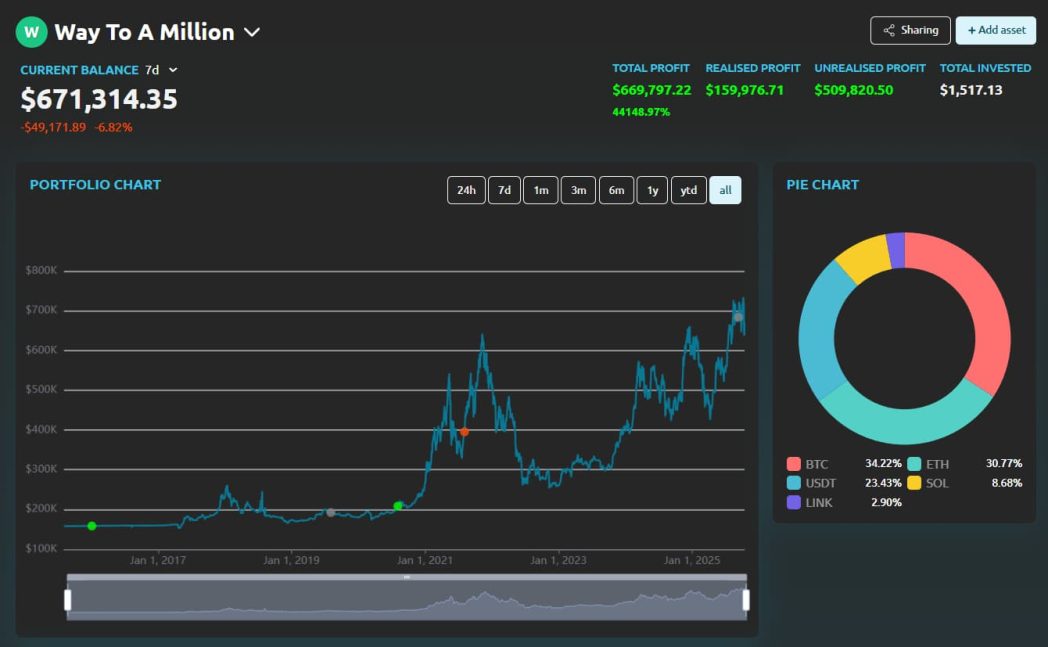
https://coindataflow.com/en/portfolio-tracker
Before we talk about alternatives, let’s begin with the product that best shows what ditching Excel really does. CoinDataFlow was built for spreadsheet-weary investors – users still wanting maximum transparency and control, but without the fear of broken functions or stale information.
Moving on from spreadsheets to structured portfolio tracking
Transcending from Excel to a structured tracker can feel like sacrificing freedom. CoinDataFlow eliminates that feeling by maintaining user control while automating the technical work Excel struggles to handle. Rather than importing files manually, you simply connect your exchanges and wallets directly. Data syncs in real time, with each transaction automatically categorized, priced, and historically recorded.
The transition takes minutes: connect your exchange APIs or wallets, and the platform instantly rebuilds your cost basis, realized and unrealized PnL, and overall performance over time. Unlike a spreadsheet, CoinDataFlow retains complete historical consistency – meaning your old trades stay accurate even as token prices fluctuate.
Feature Comparison
| Function | Excel (Manual) | CoinDataFlow (Automated) |
| Data entry | Manual CSV imports | Real-time API sync |
| Cost basis | Static formulas | Dynamic calculation per trade |
| PnL updates | Manual refresh needed | Instant with live prices |
| Historical consistency | Risk of overwriting data | Immutable records |
Real-time ROI and PnL reports without manual entry
For both short-term traders and long-term investors, the greatest value is precision. CoinDataFlow calculates both realized and unrealized profits in real-time using precise timestamps and exchange-provided fee data. Your portfolio reflects the actual market position – not yesterday’s estimates.
The software also automatically reconstructs transaction sequences. For example, if you bought Bitcoin on three different exchanges and sold portions over several months, CoinDataFlow correctly groups those trades to calculate real ROI – without writing a single formula.
This automation fixes one of Excel’s core problems: the delay between recorded data and actual activity. While spreadsheets depend on user discipline, CoinDataFlow ensures updates are accurate by default.
Pros: Precision, historical consistency, no data loss from sync
Investors often expect a steep learning curve when moving from Excel, but CoinDataFlow’s interface is designed to feel intuitive. The dashboards are clean and organized – ROI and PnL take center stage, with side panels showing allocations, balance history, and analytics per asset.
Three standout benefits:
- Accuracy – Every transaction is priced at the exact moment, including fees and exchange rates.
- Historical integrity – Older data stays valid even as new trades are added.
- No data loss – API sync prevents skipped or duplicated records, a common issue in CSV imports.
The result is a portfolio view that feels definitive. You don’t have to question if the numbers are right – you can act on them.
Cons: Lacks deep tax filing automation but excels in daily intuitiveness
CoinDataFlow prioritizes analytics over taxes. While users can export data for tax software, it doesn’t generate forms or offer jurisdiction-specific reports. That trade-off makes sense: the tool is designed for users who care more about performance accuracy than tax compliance.
Where competitors overload dashboards with tax-focused features, CoinDataFlow keeps reporting fast and usable. Investors get daily clarity and peace of mind – which is the true value of automation for most.
2. CoinGecko
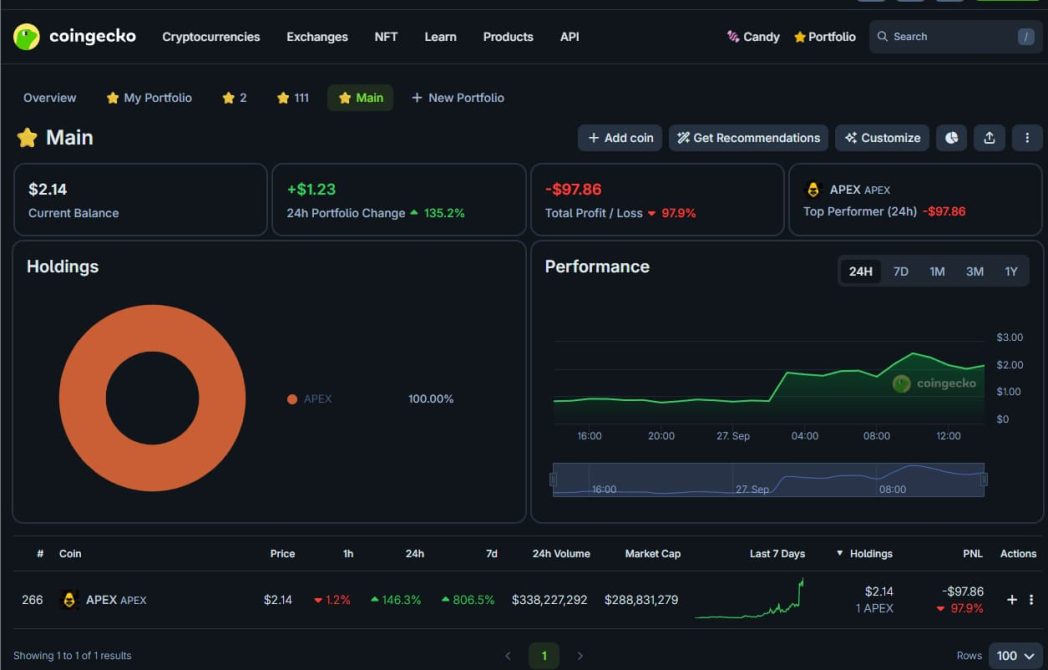
https://www.coingecko.com/en/portfolio
CoinGecko has been a familiar name in the world of crypto for a long time, first and foremost due to market data aggregation. The Portfolio function allows that functionality to extend into asset monitoring with a simple, browser-based way to review holdings. It’s best suited for newcomers looking for a free and familiar starting point before moving on to more advanced platforms.
Open and user-friendly for the newcomers
CoinGecko is often the first platform that many retail investors use to “track” a portfolio. Access is easy – no account is strictly necessary, and coins can be manually added in just a few minutes. Balances and valuations update automatically using the same data feeds that power CoinGecko’s market listings.
This low barrier to entry makes it ideal for beginners who are still learning the basics of ROI and portfolio diversification. You can open a browser tab, enter your Bitcoin and Ethereum holdings, and instantly see the value of your portfolio in your preferred currency.
That said, the simplicity comes with trade-offs. Since everything is entered manually, users are responsible for their own accuracy. There’s no automatic transaction sync from exchanges or wallets. CoinGecko doesn’t offer API connections, so tracking multiple assets or frequent trades quickly becomes tedious.
| Strength | Description | Ideal for |
| Accessibility | Free and easy to start | Beginners |
| Interface | Familiar CoinGecko design | Users who check markets daily |
| Data source | CoinGecko’s live price feed | Long-term holders |
Pros: Convenient setup, elegant design
The interface is clean and simple – especially for users already familiar with CoinGecko’s main site. The portfolio page follows the same visual style: minimal clutter, clear typography, and straightforward charts.
You can manage multiple portfolios, change currencies, and track your gains or losses over time. For those transitioning from Excel or Google Sheets, the interface feels lightweight and intuitive. There’s no steep learning curve or technical setup – just enter your assets and watch the numbers update automatically.
Many users value this simplicity. It’s the kind of tool you can check during a coffee break without worrying about integrations or tax complications.
Cons: No sophisticated calculations or export function
The biggest limitation is analytical depth. While CoinGecko displays basic profit and loss percentages, it doesn’t distinguish between realized and unrealized gains – which can lead to misleading conclusions, especially for users who frequently trade the same asset.
There’s also no cost-basis tracking or historical transaction view. You can’t, for instance, calculate your average entry price over multiple purchases or generate data for tax reporting.
Another major shortcoming is the lack of export features. Users looking to archive data or switch platforms have no built-in option to download portfolio history. This means data management is still manual – much like Excel, but with fewer customization options.
| Limitation | Impact | Workaround |
| No API sync | Requires manual updates | Periodic re-entry |
| No realized/unrealized split | Harder to gauge actual ROI | Use an external tracker |
| No export feature | Data stuck in platform | Manual screenshots |
In short, CoinGecko Portfolio works best as a beginner’s tool – a gentle introduction to portfolio tracking that doesn’t overwhelm. But once your holdings grow beyond a handful of assets, most users outgrow its simplicity and move on to platforms with automation and deeper analytics.
3. Zerion
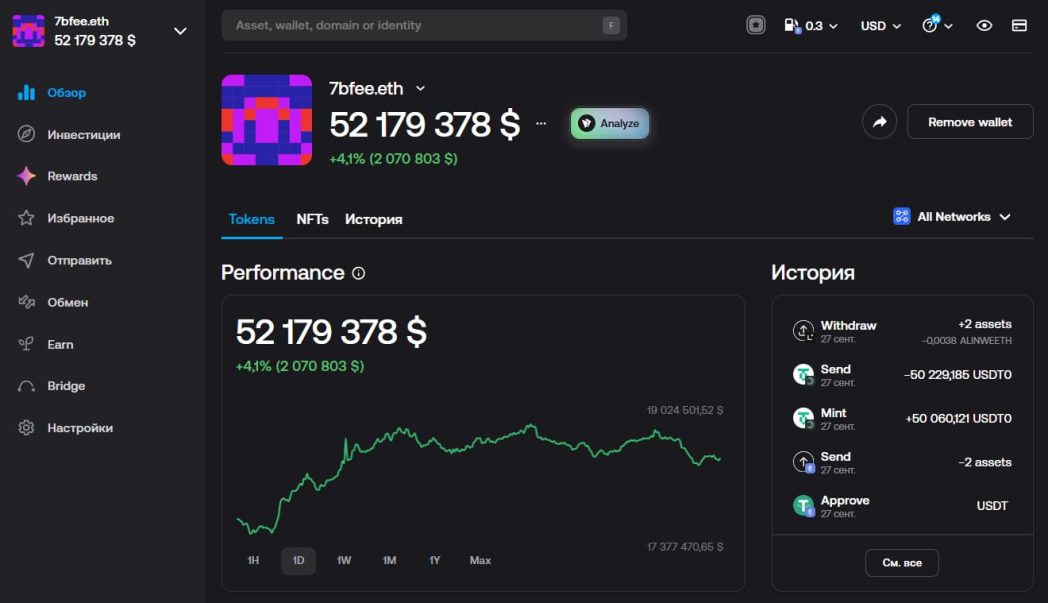
Zerion marks a clear departure from traditional tracking methods, moving toward DeFi-native portfolio management. While many platforms began by supporting centralized exchange (CEX) data, Zerion was built from the ground up to focus on wallets, tokens, and on-chain activity. It’s tailored for investors deeply embedded in decentralized ecosystems who want real-time insight across multiple blockchains.
Why DeFi-oriented users abandon manual Excel sheets
Managing a DeFi portfolio in Excel is nearly impossible. Transactions span multiple blockchains, smart contracts, and liquidity pools – none of which use centralized record-keeping. Zerion tackles this challenge directly by connecting to user wallets like MetaMask or Ledger and aggregating live data across chains.
Rather than importing CSVs or manually entering prices, Zerion pulls everything on-chain: token balances, pending rewards, NFT assets, and current DeFi positions. The app updates as transactions occur, giving you a real-time snapshot of your digital footprint.
If you’ve ever tried to reconcile Uniswap liquidity positions or monitor yield farming returns with a spreadsheet, this automation feels like a breath of fresh air. Zerion is one of the few tools that treats decentralized finance as a native environment – not a bolted-on feature.
Feature Comparison
| Function | Manual (Excel) | Zerion (Automated) |
| Data source | Manual DeFiScan/CSV | Direct wallet connections |
| Supported networks | User-dependent | 10+ major blockchains |
| NFT tracking | Manual text entries | Built-in visualization |
| DeFi rewards | Not trackable | Real-time yield display |
Pros: Frictionless wallet sync and intuitive on-chain visualization
Zerion’s biggest strength is clarity. The interface makes complex blockchain data easy to understand at a glance. Assets are neatly grouped by chain and category, with token values, NFTs, and yield opportunities shown side-by-side.
Users can toggle between Ethereum, Polygon, Arbitrum, and other supported networks in seconds. The mobile app is especially smooth, offering clean transitions and a polished interface without losing detail.
Other helpful features include customizable alerts for wallet activity, price swings, or gas fees. For DeFi investors who engage with blockchain daily, this streamlined experience is a major time-saver.
Zerion also prioritizes privacy. You only need to connect your public wallet address – no KYC or personal info required.
Cons: Limited integration with centralized exchanges
Zerion’s greatest strength – being DeFi-first – is also its main limitation. If your assets are split between Binance, Coinbase, Kraken, or other CEX platforms, Zerion alone won’t give you a full picture of your portfolio.
There’s no automatic API sync for exchanges, so off-chain holdings must be entered manually or estimated. For hybrid investors using both centralized and decentralized platforms, this results in a fragmented view.
Another shortfall is tax reporting. Since Zerion doesn’t track cost basis or separate realized from unrealized gains, it isn’t built for accounting or compliance. Its focus is real-time visibility – not bookkeeping.
| Limitation | Impact | Affected Users |
| No exchange sync | Incomplete portfolio view | Hybrid CEX/DeFi investors |
| No cost-basis data | No PnL accuracy | Traders and tax filers |
| Limited reporting | No export formats | Professionals needing reports |
Zerion is an excellent choice for DeFi-native users who prioritize visibility, speed, and privacy. But for those seeking a unified analytical view of both exchange and on-chain assets, it functions best as a supplementary tool – not a full replacement.
4. Koinly
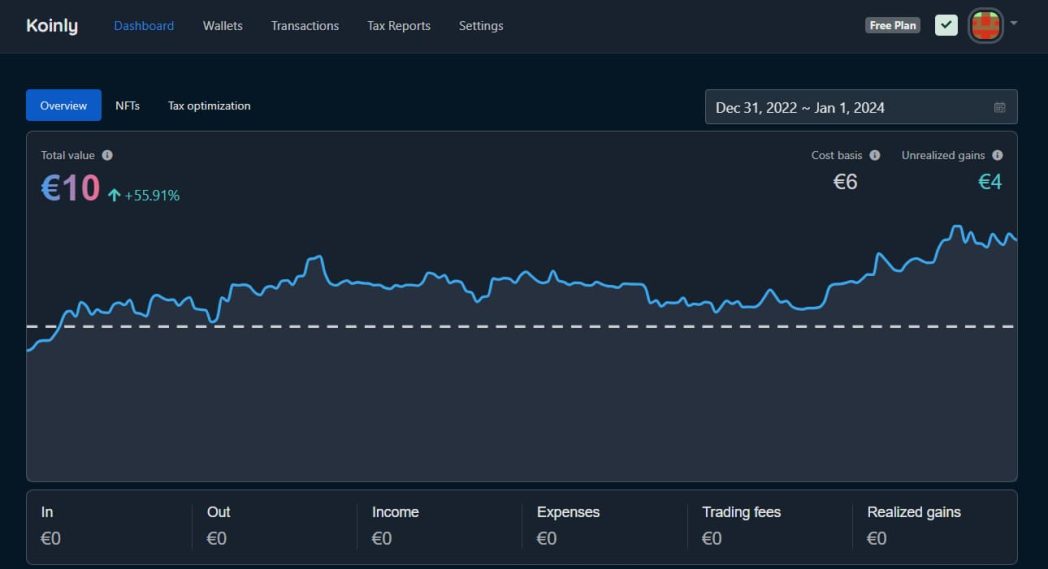
https://koinly.io/crypto-portfolio-tracker/
Koinly has earned a reputation among crypto investors who don’t just want their portfolios tracked – they need them tax-ready. While many tools focus on visualizing profit and loss, Koinly goes further by turning that data into something accountants and regulators can actually use. It’s not the flashiest tool, but it’s one of the most technically accurate when it comes to calculating cost basis and realized gains.
Mechanical tax and profit calculations vs. risk of human error
Many investors underestimate just how complex crypto taxes become when juggling multiple wallets, exchanges, and blockchains. Trying to do it manually – even with Excel – nearly always leads to errors. Koinly automates the process by pulling transaction data via APIs, matching deposits and withdrawals, and calculating capital gains according to country-specific tax rules.
This removes the need to manually match every buy and sell. Koinly calculates the correct cost basis for each sale using accounting methods like FIFO, LIFO, or ACB based on your region.
Example: How automation avoids expensive errors
| Example Transaction | Manual (Excel) Outcome | Koinly Outcome |
| 3 BTC purchased, 1 BTC sold later | Mixed cost basis, incorrect ROI | Accurate realized gain with fees applied |
| Multiple wallets with DeFi transfers | Internal transfers counted as sales | Automatically detected as internal move |
| Staking rewards from exchange | Not tracked | Automatically added as income |
This automation essentially transforms Koinly from a simple tracker into a full-blown smart accounting system – one that scales far beyond the limits of spreadsheets.
Pros: Cost basis accuracy and regulatory compliance
What makes Koinly especially valuable is its ability to bridge tracking with regulatory compliance. Users can generate localized tax reports, export data to accounting software, and compare realized versus unrealized gains in one place.
It’s also one of the few platforms that supports both crypto-native assets (like DeFi, NFTs, and staking) and traditional financial instruments in a single report – a key advantage for hybrid investors.
Other notable benefits:
- Multi-country support with customizable tax methods
- Transparent and auditable calculation logic
- Direct exports to platforms like TurboTax, TaxAct, and Xero
For investors operating across different tax jurisdictions, Koinly offers the peace of mind that spreadsheets simply can’t guarantee.
Cons: Costly for small investors, occasional API mismatches
Koinly’s power comes at a price. Its free version is very limited, and full reporting features are behind a paywall – often too steep for casual traders. Pricing is based on transaction volume, so active users end up paying more.
API stability is another challenge. Although Koinly supports hundreds of exchanges and blockchains, API keys sometimes fail or return incomplete data. The system flags these errors, but users may still need to re-sync or upload CSV files manually.
Lastly, the interface – while detailed – can feel overwhelming at first. Every transaction, transfer, and gain is visible on-screen. For users seeking a simple overview, it might feel more like accounting software than a portfolio tracker.
| Limitation | Impact | Solution |
| High pricing | Expensive for small portfolios | Stick to the basic plan without tax export |
| API mismatches | Missing transactions | Re-sync manually or import CSV |
| Dense interface | Overwhelming for new users | Use dashboard-only simplified view |
Koinly is ideal for investors who care as much about precision and compliance as they do about performance. It’s not just a tracker – it’s a financial control system. Excellent for professionals, but possibly overkill for beginners.
5. CoinTracking
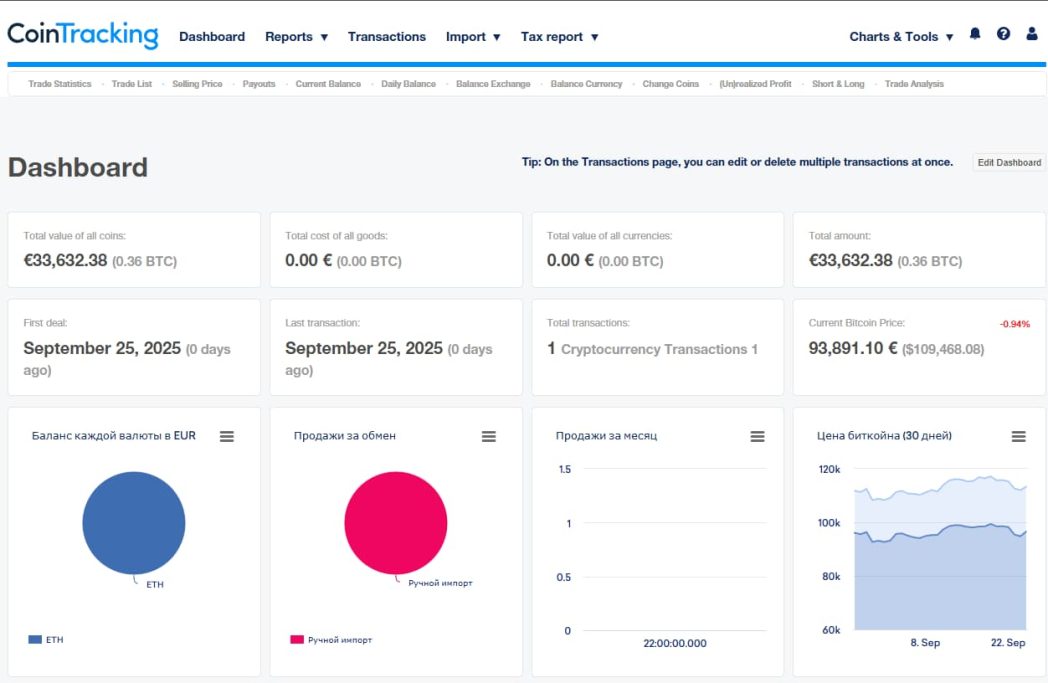
https://cointracking.info/crypto-portfolio-tracker
CoinTracking is one of the oldest and most data-rich portfolio trackers in the crypto space. Long before “automated dashboards” became the norm, CoinTracking had already made its mark as the go-to tool for serious analytics and in-depth transaction history tracking. Today, it continues to be a powerhouse for users who need deep visibility into their ROI, PnL, and tax responsibilities – though its complexity still divides opinion.
Import from Excel – when automation pays off
CoinTracking is especially attractive to users migrating from Excel or Google Sheets. It offers powerful import tools that convert spreadsheet-based manual entries into a structured portfolio record. Once imported, the platform automatically categorizes trades, detects wallet transfers, and generates historical ROI charts.
This functionality highlights the weakness of manual tracking. A typical Excel file might hold 500–1,000 transactions, which could take days to reconcile manually. CoinTracking processes the same data in minutes, using consistent cost-basis logic and catching duplicates or missing trades.
| Task | Excel (Manual) | CoinTracking (Automated) |
| Trade import | Manual copy-paste | Auto-detect via CSV/API |
| Cost-basis calculation | Error-prone formulas | Algorithmic precision |
| Cross-wallet matching | Nearly impossible manually | Fully automated |
| Historical charts | Built by hand | Interactive and built-in |
By visualizing long-term performance, CoinTracking helps users understand how their investment strategies evolve – not just how balances change day to day.
Pros: Unmatched depth of analytics
CoinTracking’s biggest strength lies in its granularity. Users can access realized/unrealized gains, daily profits, asset allocation, and even tax-optimized strategies.
Its database handles virtually every transaction type – from margin trades and airdrops to staking rewards and DeFi operations. This makes it especially suitable for advanced traders operating across multiple exchanges and wallets.
The platform’s reporting capabilities go far beyond basic portfolio apps. You can export data for tax filing, analyze holdings in over 30 fiat currencies, and generate detailed income reports for long-term accounting.
Other standout features include:
- API integrations with over 70 major exchanges
- Automatic detection of internal transfers
- Historical price data for each supported coin, going back years
For crypto professionals or business operators, CoinTracking provides an all-in-one system for accurate and detailed record-keeping.
Cons: Intimidating interface and steep learning curve
The downside to CoinTracking’s power is its complexity. The interface looks outdated and cluttered, especially on smaller screens. For new users, navigating its many menus and configuration options – especially for tax settings – can be overwhelming.
Even though automation is strong, niche cases (such as obscure tokens or smaller DEX trades) may still require manual adjustment, making the onboarding process more demanding than simpler tools.
Cost is another factor. The free version limits users to a small number of transactions, and advanced reports require paid subscriptions – which scale quickly with usage.
| Limitation | Description | Who It Affects |
| Complex UI | Too many options, outdated visuals | Beginners |
| Limited free plan | Cuts off after small dataset | Frequent traders |
| Manual tweaks for rare tokens | Data gaps in edge cases | DeFi users |
CoinTracking remains a gold standard for analytical depth and historical precision – but it’s not for everyone. Users who value exhaustive insights and long-term auditability will find immense value. For more casual investors, it may be wise to start with a simpler platform before tackling its steep learning curve.
6. Altrady
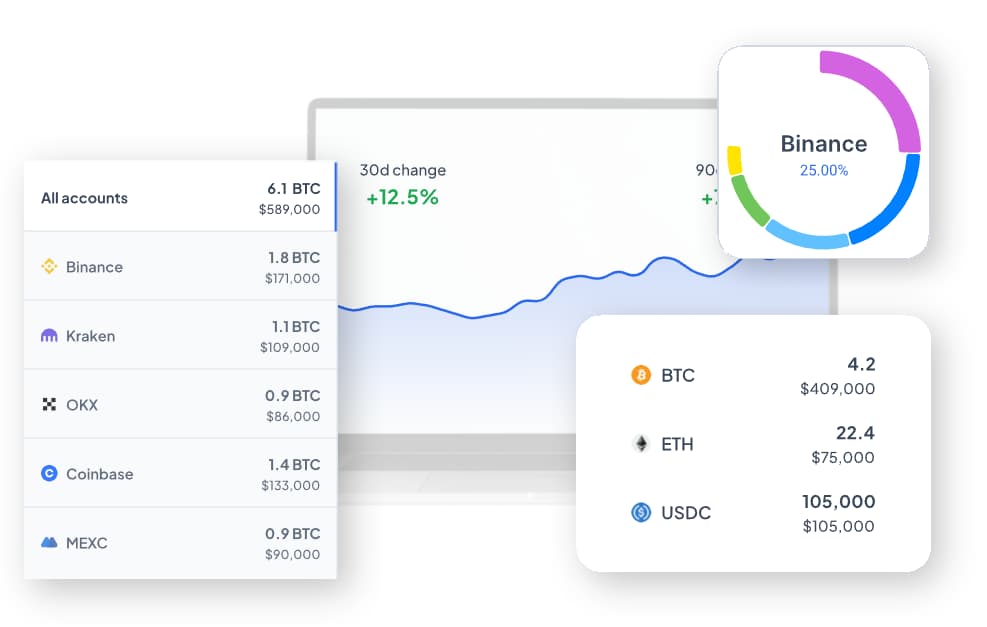
https://www.altrady.com/features/crypto-portfolio
Altrady takes a trader-first approach, setting itself apart from most portfolio tools. Rather than focusing solely on passive tracking, it combines live market data, multi-exchange execution, and performance monitoring in a single platform. It’s designed for users who actively buy and sell crypto on a daily basis, bridging the gap between portfolio management and full-fledged trading terminals.
How active traders benefit from automation
Managing several exchange accounts manually can feel like a full-time job. Balances fluctuate constantly, open orders affect unrealized gains, and trading fees vary across platforms. Altrady addresses this by providing real-time portfolio aggregation – every connected exchange syncs automatically, giving users a complete overview of their positions without the need to log in separately.
This kind of automation saves time and reduces the risk of errors that come with spreadsheet-based tracking. With Quick Scan and Smart Trading features, traders can even automate entries and exits, cutting down on emotional decision-making.
| Use Case | Manual Approach | Altrady Automation |
| Price monitoring | Manually refreshing charts | Live data feed from multiple CEXs |
| Trade logging | Spreadsheet input | Automatic sync via APIs |
| Profit calculation | Manual ROI entries | Real-time PnL dashboard |
| Exchange comparison | Multiple browser tabs | Unified terminal interface |
These features turn Altrady into more of a command center for active traders than just a portfolio viewer
Pros: Multi-exchange support and live performance metrics
One of Altrady’s biggest strengths is its broad exchange support. You can connect major platforms like Binance, KuCoin, Coinbase Pro, Kraken, and more – all from one dashboard. The platform updates price data in real time and syncs trade histories across all connected accounts, enabling performance analysis per exchange or per trading pair.
The system also includes:
- Custom alerts
- Advanced charts
- Per-asset position analytics
These help traders identify successful and unsuccessful strategies – tasks that would otherwise take hours of manual tracking.
Additional benefits include:
- Real-time PnL tracking per trade
- Portfolio segmentation (spot, futures, margin)
- Consistent experience across desktop and web versions
Together, these make Altrady a powerful tool for semi-professional traders seeking actionable analytics.
Cons: Too technical for casual investors
The same features that make Altrady powerful also make it intimidating. The interface is packed with charts, indicators, and tabs – great for active traders, but overwhelming for beginners. Those simply wanting to check their ROI or portfolio balance may find it too complex.
Pricing is another consideration. Many of the platform’s advanced features – like Smart Trading and full API access – are locked behind a paywall. While a free version exists, it’s limited and best suited for testing.
Finally, despite offering detailed analytics, Altrady lacks built-in tax or compliance modules. Users must export data to third-party tools for tax reporting.
| Limitation | Description | Affected Users |
| Complex layout | Too many technical tools | Casual investors |
| Paid plans required | Essential features behind paywall | Small-scale traders |
| No tax tools | Requires export to other platforms | Long-term holders |
Overall, Altrady is ideal for traders who treat crypto as a profession, not a hobby. It’s rich in features, deeply analytical, and highly connected – but best suited to those willing to invest in its ecosystem and pay for full access.
7. Fireblocks
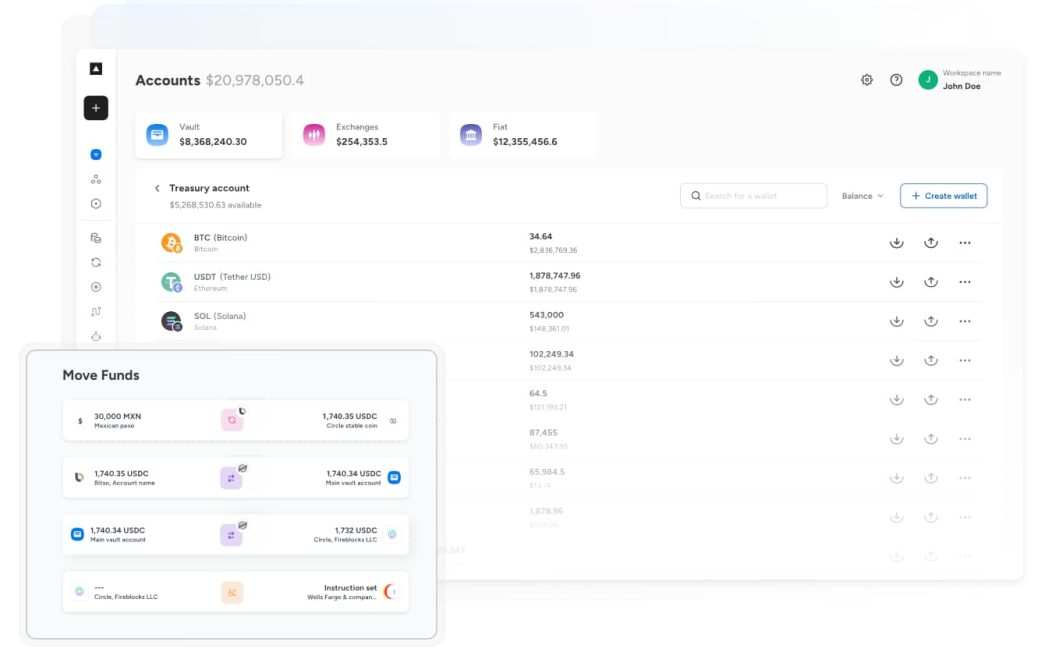
Fireblocks sits at the institutional end of the crypto portfolio management spectrum. Unlike most trackers designed for individual users, it focuses on enterprise-level security, custody, and automation for large funds, exchanges, and financial institutions. It’s less an app and more an infrastructure platform built for managing and protecting digital assets at scale.
Enterprise-level replacement for manual recordkeeping
For large organizations, spreadsheets and consumer-grade portfolio tools simply don’t cut it. They lack security, fail to synchronize across departments, and can’t handle the high volume of real-time transactions. Fireblocks replaces these fragmented systems with a unified, secure digital asset transfer and management network, giving institutions the ability to move, store, and audit crypto with bank-level precision.
Its foundation – the MPC (Multi-Party Computation) wallet infrastructure – eliminates single points of failure. Instead of one person holding private keys, Fireblocks cryptographically splits them among multiple trusted entities. This design minimizes human error – historically one of the biggest risks in manual crypto management.
| Capability | Manual Tracking | Fireblocks Infrastructure |
| Key management | Stored locally in spreadsheets or notes | Distributed through MPC security |
| Transaction approval | Single-person validation | Multi-approval workflow |
| Data reconciliation | Manual record comparison | Automated, blockchain-synced |
| Security breach risk | High | Extremely low |
This setup provides audit-ready transparency, making Fireblocks a top choice for firms managing institutional portfolios or overseeing client assets.
Pros: Institutional-grade security and reconciliation
Fireblocks distinguishes itself by integrating security, automation, and compliance into one ecosystem. Every transaction is immutably recorded, reports are auditor-ready, and its APIs connect seamlessly with accounting and trading systems.
For enterprise users, key advantages include:
- Compliance with SOC 2 Type II and ISO 27001 standards
- Centralized policy management for multiple teams
- End-to-end encryption and real-time activity tracking
- A continuously monitored custody network
These capabilities make Fireblocks particularly valuable to crypto funds, custodians, and OTC desks that require traceability and control at institutional scale.
Cons: Premium pricing and complex onboarding
Despite its strengths, Fireblocks isn’t intended for individual users or small teams. Its pricing model targets enterprises and begins at levels far beyond what casual investors would consider. Onboarding can also be complex, sometimes requiring dedicated IT teams for integration.
The interface reflects its enterprise purpose – secure and functional, but not designed for visual appeal. Those expecting a sleek, user-friendly dashboard might find it overly utilitarian.
| Limitation | Impact | Suitable Audience |
| High cost | Too expensive for individuals | Institutions and large funds |
| Complex setup | Requires IT-level integration | Professional operations |
| Non-intuitive UI | Built for function, not design | Analysts and compliance teams |
In essence, Fireblocks achieves what manual management never could – institutional-level trust, automation, and control. But that level of sophistication comes with exclusivity. It’s a reminder that the most advanced portfolio infrastructure is built for institutions, not the average investor.
Lessons From the Comparison
After evaluating platforms ranging from beginner-friendly apps to enterprise-grade systems, a clear hierarchy emerges. Each fills its own niche – from simplifying daily balance checks to automating institutional custody. Yet the overall comparison exposes the weaknesses of manual tracking and shows that automation, data consistency, and usability are what truly define long-term portfolio success.
When Excel Becomes a Bottleneck
Many investors still rely on spreadsheets, believing manual control gives them greater precision. In practice, this approach collapses under real trading volume. Once you manage multiple exchanges, wallets, or blockchains, Excel turns from a tool of control into a time-consuming risk multiplier.
Even a minor mistake – a missed transaction, a forgotten fee, or a copied wrong cell – can distort ROI or PnL by thousands of dollars. The more assets you handle, the more those errors compound. In contrast, automated trackers like CoinDataFlow or CoinTracking synchronize data in real time, eliminating the feedback loops that manual processes create.
| Problem | Manual Approach | Automated Tracker |
| Missed transactions | Common, hard to find | Automatically reconciled |
| Fee tracking | Often overlooked | Captured per trade |
| ROI/PnL updates | Requires manual recalculations | Instant, dynamic |
| Time spent | Hours or days | Seconds |
Spreadsheets are a great learning tool but don’t scale with an investor’s growth. Once your portfolio extends beyond a few coins or wallets, they quickly become bottlenecks instead of instruments of control.
How Automation Protects Against Mental and Financial “Leaks”
Portfolio management isn’t just numbers – it’s also psychology. Spending hours manually reconciling data increases fatigue and impulsive decision-making. Automation minimizes that mental load. It frees your focus for what truly matters – evaluating performance, rebalancing assets, and managing risk exposure.
Automated tools also reduce emotional friction. Knowing your portfolio updates automatically builds confidence, while manual recordkeeping constantly leaves you doubting your own data.
Take CoinStats and Altrady, for instance – their push notifications and live dashboards let traders react instantly without worrying about calculations. Similarly, tools like Koinly and CoinTracking ensure accuracy and compliance, reducing anxiety around tax filing and reporting.
In short, automation saves both time and mental energy – turning portfolio tracking from a tedious chore into a smooth, continuous feedback process.
Why Portfolio Precision Shouldn’t Depend on Human Vigilance
Crypto’s decentralized nature means data comes from inconsistent sources – each exchange formats transactions differently, each blockchain uses unique identifiers. Expecting spreadsheets to normalize all of that is unrealistic. Today, portfolio accuracy depends on system logic, not user diligence.
That’s why platforms like CoinDataFlow, Kubera, and Fireblocks succeed: they replace subjective human control with objective synchronization. Once data flows automatically and calculations remain consistent, results become verifiable.
| Aspect | Manual Tracking | Automated Solution |
| Accuracy | Human-dependent | Algorithmic |
| Emotional cost | High | Low |
| Scalability | Limited | Virtually unlimited |
| Reliability over time | Degrades with errors | Automatically maintained |
The takeaway is simple – precision should be engineered, not manually maintained. As the crypto ecosystem grows into thousands of assets and multi-chain networks, automation is no longer a luxury – it’s the new standard.
Frequently Asked Questions: Spreadsheets to Automation
Why is manual crypto tracking unsafe even for seasoned investors?
Because precision in crypto isn’t just about math – it’s about timing, pricing, and record accuracy. Even the smallest error (like a missing decimal or incorrect timestamp) can distort ROI or PnL by thousands. Manual tracking also depends entirely on human discipline – miss one update, and your data is already unreliable.
Can I make Excel safer or more efficient for crypto tracking?
To a limited degree, yes. You can integrate APIs or Google Finance formulas for live prices, but those features are still basic. Spreadsheets don’t verify blockchain data, detect internal transfers, or calculate cost basis automatically. So while Excel can be optimized, it will never be fully dependable for live crypto tracking.
Do portfolio trackers replace accountants or tax software?
No. Most trackers – like CoinDataFlow, CoinTracking, or Koinly – focus on accuracy and reporting visibility, not actual tax filing. They make reconciliation and cost-basis calculation easier, but you still need tax software or an accountant for compliance. Some trackers integrate with tax apps to help bridge that gap.
How often should I update or sync my crypto portfolio?
If you’re an active trader, daily syncing is best. Long-term holders can do it weekly. The key is ensuring your tracker or API integrations are functioning properly – even automated systems can miss new transactions if connections break.
What’s the main difference between free and paid portfolio tools?
Free plans usually include only basic tracking – manual entries, limited transaction history, and simple charts. Paid versions add automation, API synchronization, real-time pricing, and detailed performance analytics.
In short, free tiers show what you own, while paid tiers reveal how well your investments are performing.
Is it worth switching from Excel if my portfolio is small?
Yes – especially if you plan to expand or diversify. Automation saves time, reduces errors, and ensures long-term historical accuracy. Even a small portfolio can justify the switch, as avoiding just one tax or pricing mistake could cover the cost.
What’s the best tool for my needs?
- Casual holders: CoinGecko – free, simple, and beginner-friendly
- Active traders: Altrady – real-time analytics with multi-exchange control
- DeFi users: Zerion – wallet-based automation
- Tax-focused investors: Koinly or CoinTracking – deep reporting and compliance tools
- Institutions: Fireblocks – enterprise-level custody and automation
No single platform fits everyone. The best option depends on your priorities – simplicity, accuracy, analytics, or regulatory compliance.
Conclusion
Manual crypto tracking in Excel once represented control – but in today’s decentralized, multi-chain world, it signals vulnerability. Every formula, entry, and update depends on human precision in a market that never stops moving. The outcome is predictable: errors, stress, and lost opportunities.
Automation doesn’t mean losing control – it means replacing constant micromanagement with reliable oversight. Whether it’s CoinDataFlow’s simplicity, Zerion’s DeFi synchronization, or Koinly’s automated compliance, the best tools aren’t built to replace human judgment but to reinforce it.
By 2025, crypto investors face a clear choice: spend hours maintaining spreadsheets, or invest in systems that maintain themselves. The subscription may cost a few dollars – but the real expense lies in the unnoticed mistakes that end up costing far more.

The buzz around metaverses and play-to-earn (P2E) gaming once dominated headlines, but as we step into 2025, many are wondering — are Metaverses and Play to Earn alive, or did they fade with the hype? The short answer: they’re not dead. They’re evolving — becoming smarter, more sustainable, and deeply integrated with the digital economy.
Understanding the Metaverse Concept
What Defines a Metaverse Today?
The metaverse has grown beyond the early concept of 3D virtual worlds. In 2025, it’s defined as a network of interoperable, immersive digital spaces where users can socialize, create, and earn value. It’s powered by blockchain, artificial intelligence, and extended reality.
Virtual Reality vs. Metaverse — The Key Difference
While virtual reality (VR) provides immersion, the metaverse adds ownership and persistence. You don’t just visit a metaverse; you live in it — with digital assets, avatars, and virtual identities that carry real-world value.
The Rise of Play-to-Earn (P2E) Gaming
The Origin of P2E Games
The play-to-earn model gained traction with Axie Infinity, allowing gamers to earn tokens and NFTs by playing. It introduced the idea that gaming could be both fun and financially rewarding.
Blockchain Technology and NFTs in P2E
Blockchain enabled transparent ownership, while NFTs turned in-game items into tradeable assets. However, during the hype era, many projects failed due to unsustainable tokenomics.
Why Gamers Initially Flocked to P2E
Early adopters saw it as a chance to make real money. Communities in regions like Southeast Asia thrived — but when token prices dropped, interest waned.
What Happened to the Metaverse Hype?
The Boom Period (2021–2022)
Big tech investments from Meta, Microsoft, and others made “metaverse” the word of the year. Startups raised billions to create digital worlds promising limitless opportunity.
Why Interest Declined
By 2023, the market corrected itself. Unrealistic expectations, high entry barriers, and poor user experience caused a sharp decline.
Market Saturation and Investor Fatigue
Too many copycat projects diluted trust. Investors learned that not every virtual world could succeed — only those with real utility and strong communities would survive.
Are Metaverses and Play to Earn Dead or Evolving?
Transition from Hype to Utility
The metaverse isn’t dying; it’s maturing. The focus has shifted from speculation to utility — education, virtual workspaces, and digital ownership.
Real-World Applications and Integration
Businesses use metaverses for training, meetings, and immersive marketing. Universities offer virtual classes. Healthcare is testing virtual therapy environments.
How Web3 Gaming is Changing the Narrative
Web3 gaming has replaced the “earn fast” mentality with “play-and-own.” Players now value fun, long-term engagement, and true ownership over quick profits.
Current State of the Metaverse in 2025
Major Players Still Building (Meta, Roblox, The Sandbox)
Meta continues expanding Horizon Worlds, Roblox integrates blockchain, and The Sandbox remains a major player. These platforms show consistent user growth and partnerships.
The Role of AI and VR in Reinvigorating the Space
AI-driven avatars and generative world-building tools are breathing new life into metaverses. They make creation faster and experiences more personal.
Evolution of the Play-to-Earn Model
From “Play-to-Earn” to “Play-and-Own”
Instead of treating games as income sources, new models reward engagement. Players can own items that appreciate in value — a more sustainable system.
Sustainable Tokenomics in Web3 Games
Games like Illuvium and Star Atlas are redesigning token economies to prioritize player experience over speculation.
The Role of Community-Driven Economies
Communities now shape game governance and updates through DAOs (Decentralized Autonomous Organizations), fostering loyalty and fairness.
Top Projects Still Active in 2025
- Axie Infinity: Successfully revamped its economy and gameplay.
- The Sandbox: Continues hosting global brand collaborations.
- Illuvium: Blends AAA graphics with blockchain transparency.
Investor and Developer Perspectives
Developers now understand that sustainability beats hype. Investors prefer long-term projects with clear roadmaps, solid communities, and working prototypes.
FAQs About Are Metaverses and Play to Earn Alive
1. Are Metaverses and Play to Earn dead?
No. They’re evolving toward sustainability and real-world integration.
2. Which metaverse platforms are still active?
The Sandbox, Decentraland, Roblox, and Horizon Worlds remain active and growing.
3. What’s replacing play-to-earn games?
Play-and-own and create-to-earn models are replacing speculative earning systems.
4. How do AI and VR impact metaverses?
They make worlds smarter, more immersive, and easier to build.
5. Can people still earn money in P2E games?
Yes, but it’s now through sustainable models — item ownership, staking, and community rewards.
6. Is the metaverse still worth investing in?
Yes, but only in projects with strong utility, user growth, and transparent roadmaps.
Conclusion: The Metaverse Isn’t Dead — It’s Evolving
The question “Are Metaverses and Play to Earn Alive?” has a clear answer: absolutely. The era of hype may be over, but the next chapter — defined by real value, inclusivity, and innovation — has just begun.

Since 2013, EOCHU has been punching through patch notes, ban rumors, and controller salt to keep our community sharp. But even the hardest PvP grinders need an offline crit now and then. This guide shows you how to run an IRL game night—LAN, couch co-op, or hybrid stream—that feels like a well-designed level: crisp flow, clear rules, fair loot, and zero “uh-oh” moments with platform security. Along the way, we’ll borrow a few clever “mini-quest” ideas from outside the usual gaming bubble to keep the energy high.
Why host a physical game night in the era of giant lobbies?
Because presence is a buff. In the same room, people banter faster, tilt less, and learn each other’s playstyles in hours instead of weeks. New players ask for help without fear; veterans finally explain that one weird tech. For community leaders, in-person events build loyalty that outlasts metas, patches, and platforms. If EOCHU is your guild hall, a good party is the tavern.
Map the “level” before you pull the party
Think like a designer: zones, flow, feedback.
- Spawn (arrival): a small welcome station with Wi-Fi, controller charging, name stickers (gamertag + platform), and the rules.
- PvE Lounge: story/co-op stations with comfy seating and low volume—good for on-boarding and mixed skill.
- PvP Pit: head-to-head rigs on sturdy tables, chairs at equal distance, wired where possible.
- Quest Board: a whiteboard or TV with the running schedule, leaderboards, brackets, and “side missions.”
- AFK/Snack: away from hardware. Keep liquids far from power strips.
Flow: break the night into 20–45 minute blocks (set rotations), then a 10-minute reset. That cadence keeps queues short and vibes positive, even when someone’s on a hot streak.
Feedback: celebrate small wins—stickers, shout-outs, goofy titles (“Clutch Goblin,” “SMG Surgeon”). Micro-rewards lower salt.
Build a cross-platform roster that actually plays well out loud

Pick titles that are watchable, quick to reset, and tolerant of mixed skill. A sample slate:
- Couch co-op: Overcooked!, Moving Out 2, Castle Crashers Remastered.
- Party brawlers/racers: Smash, Gang Beasts, Mario Kart 8 Deluxe, Crash Team Racing, Fall Guys.
- Short-cycle shooters: Splatoon 3 Turf War, Fortnite Zero Build, Valorant Spike Rush (PC corner with headsets).
- Chill quests: rhythm or puzzle zones for decompression (Beat Saber, Tetris Effect: Connected).
Limit “winner-stays” to brief bursts; use king-of-the-hill with a cap or best-of-three formats so queues move.
Keep the hype between rounds: mini-quests & icebreakers
Not every guest wants to sweat MMR. Mix in no-controller challenges that still reward game literacy. One surprisingly rich vein: DIY party activities that structure movement, teams, and quick wins. This family-friendly roundup of Harry Potter party games is basically a toolbox of “side quests.” Re-skin for EOCHU:
- Sorting-hat equivalent → “Class Select”: guests draw cards for roles (Healer/Scout/Tank/Shotcaller) to form balanced squads.
- Potion relay → “Build Order Dash”: teams assemble a mock loadout sequence fastest.
- Clue hunt → “Patch Notes Bingo”: find features, nerfs, or emotes hidden on signage.
Low stakes, big laughs, zero queue rage.
Ban myths, account hygiene, and console safety
From the editors: our sources consistently mention bans tied to mass abuse—for example, dozens of different accounts accessed from one console in a short window. Systems are designed to block accounts and consoles when activity looks like credential farming or paid boosting rings.

What that means for your party:
- No account roulette. Don’t pass one console through a parade of logins. Create guest profiles where supported, or keep play to the owner’s account with local multiplayer.
- Do not farm or sell carries. Publicly advertising “boosting” from your event is a red flag.
- Enable 2FA on any account used; never share recovery emails or SMS codes.
- One console = few trusted profiles. If friends must log in, limit it to a small number of people you know, not a line of dozens.
- Respect ToS per platform. If a game bans modded controllers or macro pads, don’t plug them in “just for fun.”
Network hygiene: Use your own SSID/password; avoid strange login pages; update firmware before the party; power strips should be surge-protected. Harmless to you, suspicious to an anti-cheat: rapid IP/account churn. Keep it simple.
Tech setup that won’t betray you mid-boss
- Wired where you can. Ethernet beats Wi-Fi for the PvP pit. If you must use Wi-Fi, fix channel overlap and keep the microwave off during finals.
- Latency discipline. Game Mode on TVs; disable motion smoothing; set HDR per console; match refresh rates.
- Input sanity. Label controllers, charge spares, clean thumbsticks, bring alcohol wipes. Drift ruins friendships.
- Audio zones. One “headset required” corner for competitive PC/console; elsewhere, set speakers to café level so shot-callers can be heard IRL.
- Stream-safe. If you’re broadcasting, capture cards in the PvP pit, a scene with BRB and rules, and copyright-safe music.
Formats that keep people smiling
- Crew Trials (90 minutes): random squads hit three stations (co-op puzzle, speedrun slice, PvP set). Points for completion + style (crowd vote).
- Arcade Ladder: short BO3 sets; losers drop to a redemption mini-game. Nobody rots in a bracket graveyard.
- Co-op Showcase: spotlight a duo/quad with a shared mic and let the room learn a clutch strat.
- Boss Rush Finale: pick one spectacle game; crank difficulty; rotate pilots every wipe. It’s communal catharsis.
Post the run-of-show on the Quest Board so nobody asks, “When am I up?”
Code of conduct (punch problems, not people)
- No slurs. No doxxing. No “just joking” harassment.
- Consent for photos and streams. Opt-out stickers mean the camera avoids them.
- Equal playtime. Hosts enforce rotations—yes, even when the champ is your roommate.
- Cooling-off rule. If tilt spikes, take a snack break. We’re here to enjoy, not to light our social HP on fire.
Moderation is hospitality. A clear code beats an apology thread tomorrow.
Troubleshooting: the top five party killers (and how to counter)
- NAT Type Hell: Forward common ports ahead of time or put one console in the DMZ (temporarily).
- Bluetooth Crosstalk: Too many controllers? Pair in batches; keep phones out of controller mode; move metal shelves away from receivers.
- Update Ambush: Patch everything the day before; disable auto-downloads during finals.
- Power Gremlins: Use separate circuits for kitchen gear and the PvP pit; surge protectors, not daisy-chained $2 strips.
- Audio Desync: Reset TV audio to PCM; disable virtual surround unless you’ve tested it.
Keep a reset kit: spare HDMI, Ethernet, batteries, USB-C/Micro-USB, thumb drive with drivers/firmware, gaffer tape, zip ties.
Make it memorable without junking your house
- Reusable props over landfill. Fabric banners, LED candles, felt badges—things that survive the next patch cycle.
- DIY trophies. 3D-printed coins, enamel pins, or a traveling belt with velcro badges.
- Photo corner. Neutral backdrop + ring light + leaderboard overlay. Tag EOCHU and each other; share highlights in the forum.
(If you want curated IRL mini-games to break up screen time, that Harry-themed activities roundup we linked earlier doubles as a design kit; just reskin names to match your favorite franchise.)
After-action report
End with a 10-minute debrief: what worked, what dragged, which games everyone wants next time. Post a short recap in the EOCHU forums with schedules, links to settings, and any VOD. Good parties iterate like good games.
TL;DR (but read it anyway)
- Design your night like a level: zones, flow, feedback.
- Mix PvP heat with co-op warmth and off-screen mini-quests.
- Keep accounts clean: no mass logins, no boosting rings, 2FA on.
- Wire what matters, label everything, patch early.
- Enforce a kind, clear code.
- Debrief and iterate—community is a live service.
EOCHU’s been providing news and support since 2013 because we believe great play deserves great guardrails. Host the kind of party that makes new players feel welcome, veterans feel valued, and platforms see nothing but normal, healthy usage. Sign up, post your event, and we’ll help you tune it. Until then, keep your cooldowns short, your brackets fair, and your punches aimed squarely at the boss, not the party.